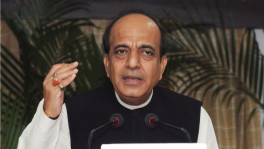
Faqir Mahbub Anam addresses UN Public Service Forum in Georgia

Faqir Mahbub Anam, Minister for Posts, Telecommunications and Information Technology, delivered the welcome address on behalf of 12 nations at the 2026 United Nations Public Service Forum in Tbilisi, Georgia, underscoring the need for cross-border innovation and collaboration in digital transformation.
Speaking at a special session on 25 June, he emphasised the importance of sharing experiences, building institutional capacity, and fostering mutual partnerships among countries in the Caucasus, Central Asia, and Asia-Pacific regions.
He expressed gratitude to the Government of the Republic of Korea, the Ministry of the Interior and Safety of the Republic of Korea, the National Information Society Agency, the United Nations Development Programme, and the Astana Civil Service Hub for their support in implementing the initiative.
 Keep updated, follow The Business Standard's Google news channel
He highlighted the challenges of digital transformation, noting that the global failure rate remains between 70 and 80 per cent.
He stressed that sharing mutual experiences is essential to mitigating these risks.
He remarked, "Peer-to-peer and South-South cooperation are core components of development. A successful solution in one nation can inspire innovation and progress in another."
Citing the forum's theme, "Transforming Public Institutions: Advancing Innovation, Accountability, Participation and Inclusion", the minister identified innovation, accountability, and inclusion as priorities for public sector transformation.
He stated that innovation must be purposeful and go beyond technological changes to transform institutional methods of public service delivery.
He observed that digital transformation cannot secure public trust or deliver lasting institutional change without accountability.
The minister cautioned that emerging technologies, including artificial intelligence, should be harnessed to bridge the digital divide rather than worsen inequality.
Highlighting Bangladesh's progress, he said a citizen-centric digital transformation is under way under the leadership of Prime Minister Tarique Rahman and the Information and Communication Technology Division.
To meet citizens' expectations, Bangladesh is adopting a "Service Delivery Maturity Model" and a "Product Management Approach" to accelerate implementation, he said.
Alongside technological advances, efforts are being made to shift government officials' mindsets and foster transformational leadership, he added.
Regarding artificial intelligence, the minister said it offers significant opportunities to enhance the efficiency and quality of public services, but governance, transparency, and fairness are essential.
Bangladesh is currently collaborating with the United Nations Development Programme to explore practical applications of artificial intelligence in public services, policymaking, and testing environments, he said.
He added that Bangladesh, despite limited resources, is prioritising artificial intelligence sovereignty, responsible use, bias elimination, and institutional preparedness.
On the sidelines of the forum, he held bilateral meetings with Vandeth Chea, Minister of Posts and Telecommunications of Cambodia; Vusal Rustamov, Executive Director of the ASAN Innovations Centre in Azerbaijan; and Alikhan Baimenov, Chairman of the Astana Civil Service Hub in Kazakhstan.
During the meetings, he highlighted Bangladesh's citizen-centric digital milestones through the Aspire to Innovate Programme and sought partnerships for the next phase of modernisation, focusing on artificial intelligence and digital public infrastructure.
Bangladesh and Azerbaijan agreed to develop a sustainable and structured bilateral cooperation framework, leveraging Azerbaijan's "ASAN Service" model and Bangladesh's integrated digital service platforms.
Bangladesh and Cambodia are collaborating on a joint framework to extend technology-enabled services to the grassroots and integrate artificial intelligence into government operations.
Technical knowledge exchange and study visits are anticipated under the auspices of the United Nations Development Programme and other international platforms.
During the meeting with the Astana Civil Service Hub, discussions focused on establishing a new innovation agency in Bangladesh, building on the Aspire to Innovate Programme's experience.
The hub is expected to provide technical and strategic assistance in establishing the agency, conducting research, and developing modern leadership training for government officials.
He noted that these engagements have created opportunities for stronger global partnerships and technical assistance to support smart governance through artificial intelligence and digital public infrastructure.
He reiterated Bangladesh's commitment to mutual learning and collective advancement on behalf of the 12 participating countries.