Humans versus human resources
People can be both an asset and, under certain circumstances, a liability for a country

Highlights:
- Population becomes asset through comprehensive human capability development
- Education should prioritise skills, knowledge, and practical application
- Health, training, and opportunity sustain productive human resource development
- Bangladesh underutilises graduates despite growing youth population
- Certificate-focused education leaves graduates unprepared for evolving labour markets
- Rising population growth threatens Bangladesh's human resource development goals
It is often said that people of a country are its greatest asset. This statement is often made in the case of Bangladesh as well. On the occasion of World Population Day, to be observed on 11 July, we shall no doubt repeat it once again.
Yet people can be both an asset and, under certain circumstances, a liability for a country. It is not merely the size of the population that matters; what truly constitutes a nation's wealth is a well-developed body of human resources. A population becomes a valuable national asset only when it is transformed into capable and productive human resources.
 Keep updated, follow The Business Standard's Google news channel
The essential condition for transforming a population into human resources is the enhancement of people's capabilities. Capability enhancement does not simply mean improving people's productive capacity as an input into the economic production process or increasing their productivity as workers. Alongside strengthening economic capabilities, it is equally important to enhance people's political, social and cultural capabilities.
For example, strengthening political capability requires expanding people's wisdom and sound judgement in making political decisions. Meaningful participation in political discourse demands broader political knowledge and skills. Likewise, anyone aspiring to run for political office must acquire specific competencies. In short, it is through the comprehensive development of capabilities across all spheres of life that a population can be transformed into human resources.
Human beings are born with certain innate intellectual and cognitive capacities. However, these capabilities need to be expanded both quantitatively and qualitatively over time. One of the principal means of enhancing human capability is education. Education should not merely be about obtaining certificates; its objective should be the acquisition of skills, the expansion of quality knowledge, and learning that has practical application in life. Alongside education, training also plays a crucial role in building human capability.
Health is another indispensable pillar of human resource development. Sound health and adequate nutrition are essential for enhancing people's capabilities. In other words, social services play a vital role in building human capability. Equally important is social interaction and collective engagement. Conversations, debates, exchanges of ideas, and intellectual interaction within society sharpen our thinking and enrich us individually. This too is a significant means of enhancing human capability.
When does a population become a liability?
The question then arises: when does a population become a liability instead of an asset? This can happen in three ways: when people's capabilities are not enhanced; when previously acquired capabilities deteriorate or remain unused; and when capabilities are developed unevenly across society.
A person's capabilities grow through individual initiative, family support and state patronage. The desire for self-improvement lies dormant within many people, although not everyone possesses the same level of innate motivation. Families also play a major role in developing human capability. Family education, values and intellectual culture expand an individual's potential.
Families help nurture political awareness, social consciousness and cultural sensibilities. The state is likewise an indispensable institution in capability enhancement. Through its policies and actions, the state creates the broader environment that enables individuals to develop their capabilities. In the absence of these supportive conditions, human capabilities cannot flourish.
Sometimes acquired capabilities deteriorate or remain unused. Many countries have invested considerable effort over many years to build high-quality human capabilities. But if opportunities to utilise these capabilities remain absent for long periods, they gradually diminish and become ineffective. Capability therefore requires opportunity. When capabilities are developed but opportunities fail to materialise, those capabilities remain unused, creating accumulated frustration and resentment among people. The state has an important responsibility in creating such opportunities.
Unequal development of capabilities also weakens a country's overall human resource base. If some sections of the population remain deprived of capability enhancement, society as a whole cannot maximise its full potential. In most countries, inadequate attention has been given to developing the capabilities of poor and marginalised communities. Consequently, the prospects of transforming these groups into productive human resources have been hindered in many ways.
Bangladesh's human resource challenge
If we examine the issue of humans versus human resources in the context of Bangladesh, five important observations deserve attention. First, Bangladeshis are widely praised for their industriousness, creativity and resilience. Yet the limitations of the country's human resources are also repeatedly highlighted.
Bangladesh continues to send predominantly unskilled workers to the Middle East. In many cases, there is little effort to improve their occupational skills before departure. Many do not even acquire a basic knowledge of the local language. As a result, they struggle with many aspects of daily life. Workers from several neighbouring countries earn considerably higher incomes in the Middle East because they possess stronger capabilities across multiple dimensions.
Second, much of the capability that Bangladesh develops remains underutilised—in other words, there is substantial waste of human potential. Consider university graduates. Every year, approximately 700,000 young men and women graduate from Bangladeshi universities with the highest academic qualifications. Yet only about 300,000 get employment.
Data also indicate that among people with different educational attainments, those with higher education experience the highest unemployment rates. This represents an enormous waste of capability and human resources.
Third, Bangladesh's education system remains largely certificate-oriented rather than human resource-oriented. Consequently, graduates encounter multiple obstacles after leaving educational institutions.
To begin with, they often lack the skills required by the labour market. Employers across industries frequently complain that job applicants do not possess the competencies they require. Two, Bangladesh's labour market is changing both in its nature and structure.
At the same time, the global labour market is being transformed by the information technology revolution. Bangladeshi university graduates are often unable to compete effectively in this rapidly evolving international environment. Three, universities are not adequately nurturing broader intellectual development and values among graduates. Four, unemployment among highly educated young people is generating deep frustration.
This, in turn, undermines their political and cultural capabilities, as well as the country's overall human resource base. Five, unequal access to education prevents poor and marginalised communities from developing their capabilities to the desired level. This inequality further reinforces broader social inequalities.
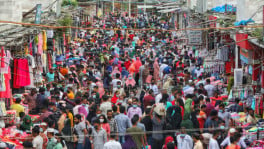
Fourth, Bangladesh's human resource challenge should be viewed from two important perspectives: the country's youth bulge and the demographic dividend. Nearly one-third of Bangladesh's population today consists of young people. In a country of around 200 million people, this represents an enormous demographic cohort.
Yet about 8.6 million young people are neither in education, employment nor training. This indicates not only a deficit in human resource development but also a significant waste of human potential. From the second perspective, it is increasingly argued that Bangladesh has largely missed its demographic dividend. The opportunity existed, but the country failed to develop the necessary human resources in time to capitalise on it.
Fifth, there is an alarming development in Bangladesh's demographic landscape. The country's annual population growth rate currently stands at 2.4 per cent. Over the past four to five decades, Bangladesh had successfully reduced population growth, maintaining a relatively low rate for many years. The recent reversal is therefore cause for concern.
Several factors have contributed to this trend: declining public awareness campaigns about the adverse consequences of rapid population growth, a significant reduction in access to family planning services, and the growing influence of conservative social attitudes. A persistently high population growth rate will make the task of transforming Bangladesh's population into productive human resources even more difficult.
On World Population Day 2026, Bangladesh's national reflection should therefore proceed along two parallel tracks. First, how can we reverse the renewed trend of rapid population growth? Second, how can we transform our population into a dynamic and productive body of human resources?