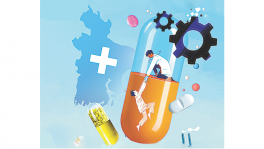
More money for health is welcome: The hard part starts after the budget
The effectiveness of this investment will ultimately depend on how strategically and efficiently the resources are utilised to strengthen healthcare delivery, improve access and quality, and build a more resilient health system for the future

Bangladesh stands at a critical juncture where health can no longer be viewed merely as a social service. It has become a fundamental pillar of national development, economic growth, human capital formation, and national security.
A nation burdened by poor health cannot achieve its full productive potential, and a weak health system cannot sustain a strong and resilient economy. In this context, the recent increase in the national health budget is undoubtedly a welcome and positive development.
The more important question, however, is whether this increased allocation will address the structural weaknesses that continue to undermine the health system or simply amount to another numerical increase in public expenditure. The effectiveness of this investment will ultimately depend on how strategically and efficiently the resources are utilised to strengthen healthcare delivery, improve access and quality, and build a more resilient health system for the future.
 Keep updated, follow The Business Standard's Google news channel
Health investment is an economic imperative, not an expense
Investment in health is one of the most effective investments a nation can make. A healthier population is more productive, loses fewer working days, incurs lower healthcare costs, and contributes more effectively to economic growth.
In Bangladesh, where out-of-pocket expenditure continues to account for the lion's share of healthcare spending, illness remains not only a medical challenge but also a pathway to financial hardship. Each year, countless families are forced to deplete their savings, sell productive assets, or descend into poverty simply to meet the costs of essential healthcare. Healthcare, therefore, cannot be viewed solely through a clinical lens; it is fundamentally an issue of social justice, economic equity, and inclusive national development.
Investing in health is about far more than constructing hospitals or purchasing medical equipment. It is an investment in human capital, in the dignity and well-being of citizens, and in the productive capacity of future generations.
Budget increase: Encouraging but still insufficient
The current budget includes a welcome increase in health sector allocation and reductions in taxes and duties on selected medical devices and raw materials. Lower taxes on dialysis filters, cardiac stents, intraocular lenses, and certain cancer treatment inputs may reduce treatment costs for patients.
However, public expenditure on health remains low compared with many countries at a similar stage of development. The Health Sector Reform Commission recommended a gradual increase in health spending to at least 5% of GDP. The fundamental question remains: Do we truly consider health a national development priority?
Why primary healthcare must come first
One of the greatest weaknesses of Bangladesh's health system is the absence of an effective gatekeeping mechanism.
Patients frequently bypass primary care facilities and seek treatment directly at tertiary hospitals, even for common illnesses. As a result, tertiary hospitals remain overcrowded and inefficient.
The Health Sector Reform Commission recommended a strong General Practitioner (GP) or Family Physician–based model.
Competent primary care physicians at the union level, modern secondary care services at upazila hospitals, and specialised services at district hospitals would significantly improve efficiency and quality throughout the health system.
A robust primary healthcare system is a prerequisite for achieving universal health coverage.
Transforming upazila hospitals into secondary care centres
The government has undertaken an initiative to upgrade all existing 50-bed upazila hospitals to 101-bed facilities, with the aim of expanding access to healthcare services across the country.
Expanding bed capacity alone does not strengthen a hospital. Upazila Health Complexes must evolve into fully functional secondary care centres with emergency services, essential surgery, anaesthesia, blood transfusion facilities, diagnostic services, maternal and newborn care, telemedicine connectivity, and non communicable disease clinics.
Infrastructure must be matched with skilled personnel, adequate equipment, accountability, and decentralised decision-making authority.
Confronting the growing burden of cancer, cardiovascular disease, and NCDs
Bangladesh is undergoing a rapid epidemiological transition.
Nearly two-thirds of deaths are now attributable to non-communicable diseases (NCDs), including cancer, cardiovascular disease, diabetes, stroke, chronic respiratory disease, and kidney disease.
Procurement systems, pharmaceutical supply chains, infrastructure projects, and human resource management require stronger transparency and oversight through electronic procurement, independent audits, performance-based evaluation, and digital monitoring systems. Good governance is the foundation upon which all successful health reforms are built.
Approximately 200,000 new cancer cases are diagnosed annually. Most patients present at advanced stages, making treatment more expensive and outcomes less favourable.
Health sector investment should therefore prioritise a National Cancer Registry, cancer screening programmes, district-level cancer detection centres, radiotherapy expansion, palliative care services, and cancer research. Initiatives such as the proposed BMU Cancer Research Institute deserve national support as part of a comprehensive cancer control strategy.
Tobacco control remains one of the most cost-effective interventions for preventing cancer and NCDs. Meaningful tobacco tax reform could simultaneously reduce tobacco consumption and generate substantial additional revenue for health.
Modernising healthcare through digital foundation
The future of healthcare is digital.
Unique Health IDs, electronic health records (EHR), e-prescriptions, digital referral systems, and AI-supported health analytics can dramatically improve quality, efficiency, transparency, and accountability.
Digital health is not merely a technological innovation; it is a prerequisite for evidence-based policymaking and reducing inefficiency and corruption.
Why Governance determines success
Increased budget allocation alone will not improve health outcomes if inefficiency and corruption persist.
Procurement systems, pharmaceutical supply chains, infrastructure projects, and human resource management require stronger transparency and oversight through electronic procurement, independent audits, performance-based evaluation, and digital monitoring systems.
Good governance is the foundation upon which all successful health reforms are built.
The true strength of a health system lies not in its buildings but in its people.
Bangladesh must invest in nurses, midwives, pharmacists, clinical pharmacists, physiotherapists, technologists, community health workers, and physicians through structured career pathways, professional development opportunities, and fair remuneration.
Policies should also encourage the Bangladeshi medical diaspora to contribute through academic collaboration, research partnerships, and specialist training programmes.
Health insurance and financial protection
Universal Health Coverage cannot be achieved without sustainable health financing.
The Health Sector Reform Commission recommended a National Health Protection Fund, Social Health Insurance, and a national health card system to protect households from catastrophic health expenditures and improve access to care for costly conditions such as cancer, kidney disease, and cardiovascular illness.
Political commitment matters most
Bangladesh has a historic opportunity to transform its health system.
Encouragingly, health has emerged as an important national priority, and the commitment expressed by Hon'ble Prime Minister Tarique Rahman and the Bangladesh Nationalist Party (BNP) toward strengthening healthcare, expanding access to quality services, promoting digital transformation, improving health financing, decentralisation, and building a more people-centred health system deserves appreciation.
Such political commitment provides a strong foundation for long-term reform.
However, increased budget allocation alone will not be enough. Political commitment must be translated into concrete implementation plans, institutional reforms, sustainable financing mechanisms, and measurable outcomes.
Budget allocation, structural reform, and political commitment must operate in harmony.
Bangladesh has a historic opportunity to transform its health system. The recommendations of the Health Sector Reform Commission, increasing public expectations, and growing political commitment provide a strong foundation for change.
The increase in the health budget is welcome.
Yet allocation alone is not enough. What Bangladesh needs is structural reform—strong primary healthcare, effective decentralisation, health insurance, digital transformation, skilled human resources, robust governance, and prevention-oriented public health policies.
Health must be viewed not as a cost, but as an investment in human capital, economic productivity, and national prosperity. The ultimate success of any health budget should be measured not by the amount allocated, but by the number of lives improved, diseases prevented, families protected from financial hardship, and communities empowered to live healthier and more productive lives.
The strength of a nation is ultimately measured not by the size of its military or the height of its buildings, but by the health, well-being, and dignity of its people. If Bangladesh is to achieve its development aspirations and build a prosperous, equitable, and developed nation, health must occupy a central place in the national agenda.
Prof. Syed Md. Akram Hussain, FCPS, MPH, FRCP, FACP, PhD is a former member, Health Sector Reform Commission, Chairman, Department of Clinical Oncology, Bangladesh Medical University (BMU)