Govt begins measles outbreak probe, 1.73cr vaccinated so far
Nine more die; no national campaign since 2020, says DGHS boss

The government has begun an investigation into the measles outbreak and the deaths of several children across Bangladesh amid growing concerns over vaccine shortages, disruptions in immunisation campaigns, and possible negligence within the public health system.
Health Secretary Quamruzzaman Chowdhury yesterday (9 May) said that authorities have already started examining the circumstances surrounding the deaths and measles outbreak.
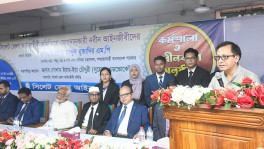
Speaking at a roundtable discussion "Measles Outbreak and the Way Forward," organised by the Bangladesh Health Reporters Forum at Bangladesh Medical University, the secretary said the investigation would determine why so many children died and whether any failures or negligence by officials occurred during the crisis.
 Keep updated, follow The Business Standard's Google news channel
"We need to know why we lost these children, where the gaps were, and whether there was any negligence from our side or from any officials," he said.
"The public has the right to know. The government is ready to remain accountable, and once the investigation is completed, the findings will be made public," he said.
The secretary, however, declined to answer questions about when the probe body was formed or who was included in it.
The investigation comes as health experts, paediatricians, and public health specialists increasingly point to systemic failures in vaccine distribution and nutrition programmes as key factors behind the resurgence of measles.
Vaccine shortages, supply chain failures
Public health expert Abdus Sabur said vaccines were available at the Expanded Programme on Immunization headquarters last year, but distribution collapsed before they reached local health centres.
Refrigerated vaccine vans in Mohakhali remained unused because there was no funding for fuel, he said.
"Previously, these costs were covered under the operational plan, but after that support stopped, the supply chain broke down," the expert said.
As a result, vaccines could not be transported from districts to upazilas and from upazilas to village-level facilities, he said. "At the same time, vaccine porters – responsible for carrying vaccines to remote areas – stopped working after their salaries and allowances were suspended."
Acknowledging the issue, the health secretary said the government had already held discussions with vaccine transport workers and formed a committee to address their financial problems.
"We believe their problems will be solved once the committee's recommendations are implemented," he said.
Quamruzzaman also announced that Vitamin A capsules would now be procured through UNICEF, a move that he said would save both time and around Tk4 crore.
No national measles campaign since 2020
Health officials and experts warned that Bangladesh's immunisation coverage has weakened significantly in recent years.
Director General of the Directorate General of Health Services (DGHS) Dr Pravath Chandra Biswas said no nationwide measles-rubella campaign, which usually takes place every four years, has been conducted in the country since 2020.
He said deaths linked to measles symptoms would be presented to the National Immunisation Technical Advisory Group, and a formal death review process could begin soon based on expert recommendations.
Several speakers argued that the current outbreak was not caused by a new strain of the virus but by growing immunity gaps among children.
Prof Dr Mirza Md Ziaul Islam, head of the department of Paediatric Infectious Diseases at Bangladesh Shishu Hospital and Institute, said measles is re-emerging in Bangladesh because many children remain unvaccinated.
He warned that pneumonia remains one of the leading causes of death among infected children.
"If a child develops breathing difficulties, seizures, high fever, inability to eat, or severe diarrhoea, they should be taken to a hospital immediately," he said.
Questions over accountability
The roundtable also exposed sharp criticism of health authorities and policymakers.
Dean of the Dental Faculty at Bangladesh Medical University, Prof Dr Sakhawat Hossain Sayantha, said the outbreak reflected both negligence and poor planning.
"Vaccines were either not brought in on time, or they arrived but were not administered properly. Both are true," he said.
He questioned why Vitamin A supplementation and vaccination efforts had been interrupted despite repeated warnings from development partners.
"If no action is taken against those responsible, the same pattern will continue in the future," he said, adding that officials responsible for policy failures should at least acknowledge their mistakes publicly.
Dr Be-Nazir Ahmed, former director of Communicable Disease Control at the health directorate, described the current situation as an epidemic.
"The outbreak may have started under the interim administration, but will the deaths now become the responsibility of the current government?" he asked.
The former director also criticised the absence of clear treatment guidelines and called for a full audit of all measles-related deaths.
Nutrition crisis deepens vulnerability
Experts also linked the outbreak to worsening nutritional conditions among mothers and children.
Public health specialist Dr M Mushtuq Hussain said measles cases are increasing globally, but Bangladesh's child deaths point to deeper systemic failures.
"There are immediate causes, but there are also structural weaknesses in the system," he said.
He warned that more child deaths could occur in the coming weeks unless critically ill children from marginalised families are quickly admitted to hospitals.
UNICEF Health Manager Riad Mahmud said Bangladesh must achieve at least 95% routine immunisation coverage alongside special campaigns to maintain herd immunity.
World Health Organization's immunisation officer Dr Chiranjit Das stressed the importance of ensuring children receive all vaccines on schedule, not just measles shots.
1.73 crore vaccinated
Quoting officials, state-run news agency BSS reported yesterday that so far, 1,72,68,908 children in the country have received the measles-rubella vaccine.
Some 96% of the target to vaccinate 18-month children under the ongoing nationwide immunization programme to control the measles outbreak has been achieved, they said.
DGHS Director General Professor Pravath Chandra Biswas told BSS that the number of measles cases has already started to decline in the areas where 100% vaccination has been achieved.
The government launched the first phase of the vaccination programme on April 5 in 18 districts across 30 upazilas.
In the second phase, from April 12, vaccination began simultaneously in four important city corporations – Dhaka South, Dhaka North, Barishal, and Mymensingh – and is still ongoing.
In the third phase, from April 20, the measles-rubella vaccination campaign started nationwide.
Nine more die
Meanwhile, nine more children died from measles and related symptoms in 24 hours till 8am yesterday, according to the DGHS.
During the same period, 946 patients with measles-like symptoms were admitted to hospitals nationwide. Of these, 489 cases were laboratory-confirmed as measles.
So far this year, at least 61 children have died from confirmed measles infections in Bangladesh. In addition, 291 children have died with symptoms consistent with measles.
So far, 47,656 suspected and 6,979 confirmed measles cases have been identified nationwide.