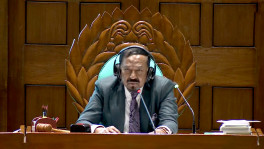
Why Vance believes Hegseth is misleading Trump on Iran war
The concerns centre on battlefield assessments, US weapons stockpiles, and whether senior military leaders are accurately reflecting conditions in the conflict,

Vice President JD Vance has privately raised concerns that the Pentagon's reporting on the eight-week-old Iran war may be presenting an overly optimistic picture to President Donald Trump, according to officials familiar with internal discussions.
The concerns centre on battlefield assessments, US weapons stockpiles, and whether senior military leaders are accurately reflecting conditions in the conflict, says the Atlantic.
Pentagon's public assessment of the war
 Keep updated, follow The Business Standard's Google news channel
Defence Secretary Pete Hegseth has publicly described major US gains, saying Iran's military has been "decimated" and that American forces have achieved "complete control" over Iranian airspace.
Chairman of the Joint Chiefs of Staff General Dan Caine has aligned with that assessment, describing sustained operational success and stable US supply levels.
Some Trump administration officials, however, have suggested the tone of briefings is intentionally positive, with claims that they are designed to "give the president what he wants to hear". One former Trump official said Hegseth's communication style reflects that "Pete's TV experience has made him really skilled at knowing how to talk to Trump and how Trump thinks".
Vance's public praise and private scepticism
Publicly, Vance has supported the administration's military leadership, saying Hegseth is "doing a great job" and working with the President to reinforce the military's "warrior ethos" within senior ranks.
However, in private meetings, officials say he has "repeatedly questioned" Pentagon claims about the war's progress.
Those familiar with the discussions say Vance has described official assessments as a "rosy portrayal" of the conflict, raising doubts about whether they reflect the reality on the ground.
A White House official described his role in internal debates as someone who "asks a lot of probing questions about our strategic planning, as do all of the members of the President's national security team".
According to reporting by the Atlantic, Vance "has presented his concerns as his own rather than accusing Hegseth or Caine of misleading the president", in an effort to avoid public fractures within the administration.
Disputed assessments of Iranian capabilities
Internal US intelligence findings cited in reporting suggest Iran's military remains more capable than publicly described. These assessments indicate Tehran has retained around two-thirds of its air force, along with most missile-launching capacity and naval assets, including small fast boats used in the Strait of Hormuz.
That contrasts with Pentagon claims of severe degradation of Iranian forces.
Concerns over US munitions stockpiles
A key focus of Vance's concerns is the state of US weapons supplies. He has questioned whether the Pentagon is underestimating what he sees as a significant drawdown in missile inventories.
The Centre for Strategic and International Studies (CSIS) estimates the US has "burnt through more than half" of several key munitions during the conflict.
Vance has warned internally that such depletion could affect US readiness for potential future conflicts involving China, North Korea, or Russia.
Opposition to the war before it began
Vance's scepticism predates the conflict. Before the launch of Operation Epic Fury on 28 February, he reportedly argued the war was a "bad idea that would lead to mass casualties and regional chaos".
Despite those concerns, he has remained involved in the administration's diplomatic efforts.
He served as a negotiator in initial peace talks held in Islamabad, Pakistan, and was preparing for further discussions before they were cancelled.
Political and strategic balancing act
Officials describe Vance's position as a balancing act between internal scepticism and public unity within the administration's war policy.
His private concerns focus on ensuring military planning is grounded in accurate intelligence and that US readiness for other global threats is not weakened.
At the same time, he continues to support the administration publicly while navigating the political implications of the conflict, which advisers say could shape his longer-term political future.