Iran says no decision yet on resuming US talks as Hormuz remains key dispute
Qatar and Pakistan are facilitating an exchange of messages between the two sides, but Araghchi said the communications did not amount to formal negotiations

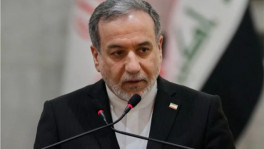
Iran has not yet decided whether to resume negotiations with the United States to end the conflict, with disagreements over ceasefire violations and the status of the Strait of Hormuz continuing to impede efforts to revive talks, Iranian Foreign Minister Abbas Araghchi said on Saturday.
"We have not yet made a decision to restart negotiations with the United States," Araghchi said.
Qatar and Pakistan are facilitating an exchange of messages between the two sides, but Araghchi said the communications did not amount to formal negotiations, says Al Jazeera.
 Keep updated, follow The Business Standard's Google news channel
"But this does not mean negotiations," he said.
Araghchi blamed the United States for the resurgence of violence after a memorandum of understanding was signed in Pakistan in June, saying a "new path" must be established to resolve the conflict.
The Strait of Hormuz remains a central point of contention. US President Donald Trump has said he intends to take control of the strategic waterway after Iran is defeated.
"After we finish defeating Iran … I'll be declaring the Hormuz Strait a territory of the United States," Trump said.
Iran has rejected any such claim. Deputy Foreign Minister for Legal and International Affairs Kazem Gharibabadi said: "Strait of Hormuz has been Iranian, is Iranian, and will remain Iranian."
Iran is working with Oman to design temporary alternative shipping routes because existing routes are no longer functional, Araghchi said.
"The routes that previously existed are no longer functional, and a new route must be defined. We are currently designing a temporary route that will become the final route in the next stages," he said.
But the resumption of shipping through the Strait would depend on conditions that Washington must meet, Araghchi said.
"Whether or not shipping traffic in the Strait of Hormuz resumes … depends on the fulfilment of other conditions that the United States must adhere to," he said.
Military incidents continue
The uncertainty over negotiations comes as military incidents continue in and around the Strait.
A vessel belonging to UAE energy company Abu Dhabi National Oil Company (Adnoc) was recently attacked while transiting the waterway, according to the information provided, marking the latest in a series of similar incidents.
The Strait of Hormuz, through which a significant share of global oil shipments passes, has become a major focus of the conflict, with disruptions to shipping adding pressure to regional energy markets and international trade.
US turns to economic pressure
After six months of fighting failed to overthrow Iran's government or reopen the Strait, Washington is shifting towards greater economic pressure, according to the information provided.
US Treasury Secretary Scott Bessent said the United States would combine intensified economic pressure with continued restrictions on shipping from Iranian ports.
"It will be a combination of economic isolation the world has never seen before, and the continued blockade in the Strait of Hormuz that will keep anything from going in or out of the Iranian ports," Bessent said.
Washington has also begun targeting a network of shell companies and currency exchange houses that it says make up part of Iran's "shadow banking system". The network was used to move hundreds of millions of dollars internationally, according to the information provided.
Bessent said the campaign was already putting pressure on the system.
"Iran's shadow banking system is buckling under Economic Fury, and the regime is running out of ways to move money," he said.
The measures represent an effort to increase pressure on Iran as the dispute over the Strait and the terms of any ceasefire remain unresolved.
Standoff tests both sides
Former US ambassador and White House Middle East policy adviser Marc Ginsberg described the confrontation as a contest in which both sides are testing how long the other can withstand economic and political pressure.
"This is sort of a game of economic chicken. Which of the two parties is going to jump off the side of the road before a collision?" Ginsberg said.
He predicted that Washington could eventually be the first to back down.
"I think in the end, the administration's going to cave before the Iranian government does," Ginsberg said.
For now, the exchange of messages through Qatar and Pakistan provides a channel between the two sides, but Iran has yet to agree to formal negotiations. Disputes over ceasefire violations, shipping through the Strait of Hormuz and the conditions for ending hostilities remain unresolved.