BSEC restores bourses’ authority to set circuit breakers, trading rules
The exchanges must immediately notify the BSEC of any changes and ensure the information is properly communicated to market participants.

The Bangladesh Securities and Exchange Commission (BSEC) has restored the authority of the country's two stock exchanges to independently set circuit breakers and other key trading parameters, reversing a 2021 directive that centralised those powers under the regulator.
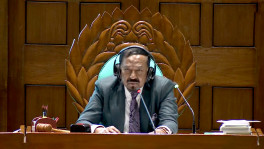
The decision was taken at an emergency commission meeting chaired by BSEC Chairman Masud Khan today (1 July).
Under the new directive, the Dhaka Stock Exchange (DSE) and the Chittagong Stock Exchange (CSE) will be able to independently determine trading control measures, including circuit breakers, tick size, market lot, block size, order size, closing price calculations, market protection percentages and index calculation frequency.
 Keep updated, follow The Business Standard's Google news channel
The exchanges must immediately notify the BSEC of any changes and ensure the information is properly communicated to market participants.
The commission also repealed its 17 June 2021 order that had transferred these operational powers from the bourses to the regulator.
BSEC spokesperson Abul Kalam told TBS that the decision is part of the commission's broader deregulation initiative.
He said the regulator had previously exercised these powers through various directives despite the exchanges originally having the authority. With the latest decision, the BSEC will no longer intervene in setting circuit breakers and other trading parameters.
To ensure a smooth transition, he said, the existing trading limits will remain in force until the exchanges formally approve and implement new rules.
Dhaka Stock Exchange Managing Director Nuzhat Anwar confirmed that no immediate changes would be made to the current circuit breaker system.
She said any future revisions would first be reviewed and approved by the DSE board before being implemented. As a result, trading today will continue under the existing price movement limits to maintain market stability.
Under the current framework, securities priced up to Tk200 can move by up to 10% a day, while those priced between Tk200 and Tk500 have an 8.75% limit. The allowable price movement gradually declines with higher-priced shares, reaching 3.75% for securities trading above Tk5,000.
Separately, the BSEC decided to relax dividend distribution requirements for open-ended mutual funds, allowing them to retain and reinvest earnings instead of distributing them as dividends if trustees approve proposals from asset managers in the interests of investors and the market.
At present, open-ended mutual funds are required to distribute at least 70% of profits under fixed-income schemes, 30% under growth schemes and 50% under other schemes.
Abul Kalam said the move would benefit investors because cash dividends are subject to a 15% tax, whereas gains realised through unit redemption are not. Retaining earnings would also increase the asset base of the funds, potentially generating higher long-term returns for investors.