Who speaks about violence against hijras?
Although Bangladesh officially recognised hijras as a distinct third gender in 2013, the lived realities of these individuals often remain shaped by stigma, exclusion, and, critically, gender-based violence that is rarely acknowledged or documented

Sunlight fell across Diana's (pseudonym) face as morning approached 9am. Half-asleep, she heard her mother enter the room looking for something. The woman paused briefly at her child's sleeping face before muttering, "Allah, please take her while I am still alive, for I do not have to see this face anymore."
Diana lay silent. Ever since adolescence, she said, she had been treated as a disgrace to the family.
Later that day, she rushed to meet one of her gurus from Bangladesh's hijra community, legally recognised as a third gender. Only then could she begin to cry.
"If I were disabled, would my parents still be ashamed of me?" she asked. "How evil does someone have to be to get cursed by their own mother?"
 Keep updated, follow The Business Standard's Google news channel
Diana is a new member of Bangladesh's hijra community. She was sharing her experiences alongside several other third-gender individuals in a vividly painted office room.
As the eyes caught the intricate strokes of white alpona on the pale orange wall, Diana pointed out to Nazia (pseudonym), another hijra. "She painted it."
The remark carried a quiet frustration.
"Tell me, have you ever watched a film about hijras without clapping, dancing or collecting money?" Diana asked. "We are always shown as comic relief. But we are good at creative work too."
The office space where the discussion was carried out, did not feel secure for them.
"Within a week of renting this office last year, around 12 or 13 people came here," Nazia said. "They claimed to be linked to political groups and the government. They questioned what we do and where our funding comes from. It felt intimidating."
"Sometimes I cannot even come here freely," she added. "I do not always come dressed up. When I enter the office, I change my clothes and put my make up on"
The lived realities of third gender individuals often remain shaped by stigma, exclusion, and, critically, gender-based violence that is rarely acknowledged or documented.
The making of exclusion
The structural pattern starts within the family, then continues through relatives, schools, and society.
Children who display gender non-conforming behaviour are often bullied in school and at home. For which, many eventually have to drop out of school.
Shuva, another hijra, said she left school so her younger sister could continue studying.
"We used to eat together during tiffin break, but I could see how ashamed she felt because other children mocked us," Shuva said. "I stopped roaming around during breaks and stayed in the classroom. But there, too, I was taunted. My sister suffered because of me, and I could no longer accept it."
"One day I told my parents I did not want to continue school. When my sister said she wanted to continue, I encouraged her. I chose her future over mine."
Shuva said violence is not always physical. "It's not always that we are beaten and thrown out of home."
"The biggest obstacle is not necessarily the law itself, but how the law is interpreted and applied. There is still a significant lack of sensitivity and understanding regarding gender diversity within law enforcement agencies, investigation processes, and the justice system"
"Sometimes it's emotional. What will you do if your mother says, 'Because of you, my daughter cannot get married?'"
The violence is layered with shame, silence and blame. Growing up, many hijra individuals describe an acute awareness of how their presence affects their families.
"So what do we do?" Shuva said. "If I stay, they suffer. So I leave."
For many, that decision comes early—around the age of 12 or 13.
"At the end of the day, I have no one—not my mother, not my sister. Only my boyfriend is there. But partners often can become unreliable", Shuva continued.
"Many hijras enter relationships with men who ultimately take advantage of them. These partners often do not have a stable income, so we provide for their food, housing, and other needs. Yet despite our support, many eventually leave us or treat us poorly," Shuva said.
"Do we sense early that our partners would leave us? Often, yes. But we choose to stay because we never receive love and affection from family or relatives."
They said such relationships often fail to mature or survive because society remains unwilling to accept relationships involving third-gender individuals.
In wealthier families, the trajectory can look different— as some individuals move abroad or find ways to navigate identity within privilege. But for most, especially from lower economic backgrounds, exclusion leads to a narrowing of choices.
When violence is not recognised
While sexual violence remains one of the most pervasive forms of gender-based violence that cuts across class, geography, and identity; not all victims are recognised equally.
For hijra individuals in Bangladesh, sexual violence exists in a space of denial. However brutally it takes place, it is rarely acknowledged by society, institutions, or even within systems responsible to deliver justice.
"A friend of mine was raped by 13 men." Shuva said.
"When we tried to take the case to the police, she was afraid to go. She said the police would detain her instead. When I insisted and took her, the police's reaction was, 'Hijras cannot be raped.'"
For many, the idea that a hijra body can be violated is still not fully acknowledged. When violence is not recognised, it fails to register within the system as violence at all.
When hijra individuals seek legal support after experiencing sexual violence, the first barrier they usually encounter is institutional acceptance. In many cases, while trying to file complaints, they face ridicule, disbelief, or degrading behavior because of their identity, language, or way of life. This is a question of human dignity and equal rights.
Recognition without protection
For rights groups, the problem extends beyond individual prejudice.
Abu Ahmed Faijul Kabir, senior coordinator of Ain o Shalish Kendra says, "The biggest obstacle is not necessarily the law itself, but how the law is interpreted and applied," adding, "There is still a significant lack of sensitivity and understanding regarding gender diversity within law enforcement agencies, investigation processes, and the justice system"
When discussions of gender-based violence arise, women are often the first group that comes to mind. Yet violence against hijra communities—one of the most marginalised groups in Bangladesh—remains largely overlooked.
Although the Government of Bangladesh officially recognised hijras as a distinct third gender on 11 November 2013, meaningful inclusion and protection have lagged behind.
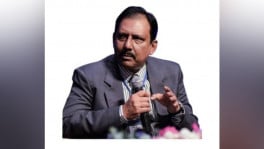
M Rabiul Islam, Deputy Director at National Human Rights Commission noted that institutional sensitisation remains a major challenge.
"If society as a whole continues to view hijras as outsiders and fails to truly recognise them as equal members of society, it is difficult to expect police officials to think differently," he said. "I do not believe government institutions have been adequately sensitised."
Drawing on his experience working with hijra communities through the Human Rights Commission, Robiul said members of the community had repeatedly reported difficulties in seeking justice after experiencing violence.
"There have been cases where hijra individuals approached the police after facing violence, but officers were unwilling to register complaints against the perpetrators," he said. "Their concerns were often dismissed because of stereotypes about their behaviour, and many cases were handled in an unprofessional manner."
When asked about the Human Rights Commission's current initiatives to address gender-based violence against hijra people, Robiul painted a bleak picture.
"The Commission has been largely ineffective for a long time," he said. "Most activities have come to a halt, and there has been little to no progress on existing projects."
Md Shajahan, Deputy Director at the Department of Social Services says, "Any citizen who becomes a victim of violence has the legal right to go to the police station and seek justice or remedies. There is no need for any separate arrangement for that."
However, he believes there should be a law specifically addressing the legal rights third gender people deserve. "Such a law is very important. A draft was prepared before, but it was never finalised."
When exclusion has a cost
In terms of property and inheritance, many hijra individuals are deprived of their rightful share.
"We receive many complaints about this. When they try to claim property, they face further violence from siblings and family members," said Moshiur Rahman, Manager, Advocacy and Communications at Bandhu Social Welfare Society.
"This can be termed as economic violence. When they enter the job market, they are often denied employment because of their identity and mannerisms. This cycle of gender-based violence keeps looming," Moshiur concluded.
"If you observe their behaviour in public spaces, sometimes people perceive them as aggressive. But this is also shaped by how society treats them. When someone is constantly dehumanised, they may respond defensively.
People often say hijras behave badly—but they themselves are not treated as human beings.
They are excluded from cultural participation as well. For example, even if they want to perform dance in a cultural program, they will be unwelcomed," said Moshiur.
The varied forms of gender-based violence unfolds a pattern of absence—of protection, of access, of recognition.
Legal safeguards against gender-based violence exist in Bangladesh, but they rarely extend in practice to hijra individuals. Activists and rights groups say the problem lies in the failure to interpret and apply them in ways that include gender-diverse bodies and identities.
"There is a gap between recognition and protection," Moshiur, pointing to the lack of clarity in how existing laws are enforced.
That gap becomes most visible at the point of seeking help.
For many hijra individuals, approaching the police or healthcare system is not a straightforward option. Years of stigma and prior experiences of dismissal have created deep mistrust. As a result, violence often goes unreported. There is little confidence that reporting it will lead to justice.
Support systems, too, remain limited. While some organisations provide counseling and legal aid, there are few spaces specifically designed to address the needs of hijra survivors of violence. As safe shelters remain scarce, long-term support is even rarer.
At the same time, public perception continues to reinforce the cycle. Hijra individuals are still widely viewed through stereotypes. Their presence in public spaces obscures the structural conditions that shape their lives.