US cushions RMG export fall in EU, non-traditional markets
Bangladesh’s ready-made garment (RMG) exports totalled $38.70 billion in FY2025-26, down 1.64% year-on-year.

A late-year improvement in Bangladesh's key North American apparel markets softened the overall decline in garment exports in FY2025-26, but weakness in the European Union – particularly Germany – and major non-traditional destinations has exposed the fragility of the country's market diversification drive.
Bangladesh's ready-made garment (RMG) exports totalled $38.70 billion in FY2025-26, down 1.64% year-on-year, according to Export Promotion Bureau data compiled by the Bangladesh Apparel Exchange.
The decline masks gains in several traditional markets during the closing months of the fiscal year. Exports to the United States, Bangladesh's largest single-country apparel destination, rose 2.63% to $7.74 billion. Shipments to Canada increased 3.20% to $1.34 billion, while exports to the United Kingdom edged up 0.91% to $4.39 billion.
In contrast, exports to the European Union, Bangladesh's largest regional apparel market, declined 3.31% to $19.06 billion.
 Keep updated, follow The Business Standard's Google news channel
Germany, Bangladesh's second-largest single-country RMG destination after the US and its biggest market within the EU, was a key contributor to the regional decline. Apparel exports to Germany fell 11.50% to $4.38 billion in FY26 from $4.95 billion a year earlier.
Exports also declined in France, Italy, Belgium and Denmark, while growth in Spain, the Netherlands and Poland was not enough to offset the broader EU slowdown.
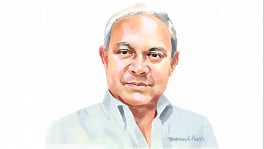
Mohammad Hatem, president of the Bangladesh Knitwear Manufacturers and Exporters Association (BKMEA), said the late-year gains should not necessarily be read as a recovery in fresh orders.
"Last June had substantially fewer working days because of Eid holidays, whereas factories had a full working month this year. So, part of the growth reflects the difference in working days rather than any major increase in fresh orders," he told The Business Standard.
He said the sector had not received a significant volume of additional orders and the outlook for the coming months remained weak.
On the EU decline, Hatem said buyers were gradually shifting part of their sourcing to India in anticipation of Bangladesh's post-LDC tariff exposure.
"It is not only Germany; exports have declined across much of Europe. Buyers are building sourcing capacity in India in advance, as they expect India to enjoy preferential access while Bangladesh may face duties after graduation," he said.
Hatem said H&M's order placement in Bangladesh this year was around 40% lower than a year earlier, based on discussions with company representatives. He said India's policy support for garment investment, coupled with Bangladesh's reduced export facilities and energy and banking constraints, was making the neighbouring country more attractive to buyers and investors.
Meanwhile, exports to non-traditional markets – seen as critical to reducing dependence on Western buyers – fell 4.25% to $6.16 billion, a sharper contraction than the overall decline in RMG exports.
The performance was mixed. Although exports to China rose 17.12% to $263.21 million, supported by a 26.88% increase in woven garment shipments, the gain was too small to offset declines in Bangladesh's larger alternative markets. Saudi Arabia, the United Arab Emirates, Malaysia and Brazil also posted double-digit growth.
Bangladesh's largest non-traditional apparel destination, India, recorded an 11.40% decline to $570.77 million, driven largely by a 19.16% fall in woven garment exports. Exports to Russia fell 29.88% to $228.78 million, while Australia, Turkey, South Korea and Mexico also posted declines.
Non-traditional markets accounted for 15.93% of total RMG exports during the fiscal year, down from 16.36% a year earlier, indicating that export concentration in traditional Western markets remains largely unchanged.
Mahmud Hasan Khan, president of the Bangladesh Garment Manufacturers and Exporters Association (BGMEA), earlier told The Business Standard that non-traditional markets were becoming increasingly important ahead of LDC graduation, but exporters faced constraints including limited export-credit facilities.
He said stronger trade agreements, improved market access and policy support would be needed to help exporters expand in emerging destinations.
The data show that gains in the US, Canada and UK have provided some relief, but the EU slowdown and declines in India, Russia and other non-traditional destinations underline the lack of sustained momentum in Bangladesh's diversification drive.