Experts warn of growing threats to investigative journalism amid political polarisation, disinformation
International freedom of expression expert Joan Barata said freedom of expression must go hand in hand with accountability from both political actors and media professionals

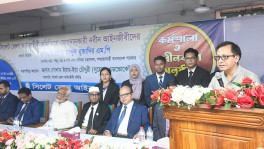
Investigative journalism and freedom of expression are facing increasing pressure from political polarisation, disinformation, economic instability and misuse of state power, speakers said at the Bangladesh Journalism Conference 2026 in Dhaka yesterday.

The conference, held at Radisson Blu Dhaka Water Garden, brought together journalists, editors, researchers and policy experts from several countries to discuss challenges facing media freedom and information integrity in South Asia.
Foreign journalists and media experts stressed the need for stronger editorial independence, sustainable media business models and safeguards against online misinformation, particularly ahead of elections.
International freedom of expression expert Joan Barata said freedom of expression must go hand in hand with accountability from both political actors and media professionals.
 Keep updated, follow The Business Standard's Google news channel
"Freedom of expression is great, but it comes with responsibility," he said, warning against political interference in journalism through legal and institutional pressure.
He also highlighted the financial vulnerability of media organisations, saying independent journalism cannot survive without sustainable economic models.
"Without a proper business model, without viable media from an economic point of view, the system will not work," he said.
Transparency International Bangladesh (TIB) Executive Director Iftekharuzzaman said journalists and human rights defenders have been working under growing pressure and risk in recent years, particularly since August 2024.
He said concerns remain over continued pressure and attacks on journalists and media institutions despite hopes for a more open and democratic media environment.
"The way one of Bangladesh's leading media institutions came under attack, and the way the interim government remained largely silent, reflects a deeply irresponsible stance," he said.
He alleged that authorities failed to take effective action despite repeated appeals and requests for intervention.
The Daily Star Editor Mahfuz Anam said independent journalism is essential for investigative reporting and ensuring accountability in governance, warning that pressure from political and business interests often obstructs journalists from exposing corruption.
He said investigative journalists frequently face pressure because their reporting affects influential individuals, including advertisers and people connected to the government.
"When your reporter does investigative journalism, the first issue that will arise is exposing those who are committing corruption," he said.
Mahfuz stressed the importance of strong editorial institutions capable of resisting such pressure, saying the role of editors is central to protecting independent journalism.
"Unfortunately, in our country, the institution of the editor has not grown," he said, adding that editorial independence is often weakened by political influence and ownership pressure.
He also said many journalists become politically aligned, which affects professional independence and weakens accountability journalism.
"One of the main reasons for the weaknesses and the fall of the past governments was that they did not allow the independent media to flourish. Because independent media raised questions. It verified their accountability. It exposed them," he said.
He expressed hope that the new government would recognise that independent journalism is necessary for transparency, accountability and effective governance.
"Let independent journalists perform investigative reporting based on ethics, keep institutions accountable, and make our public fund expenditures transparent," he further said.
Foreign journalists also warned of growing threats to investigative reporting across South Asia.
Zaffar Abbas, editor of Pakistan's English-language daily Dawn, said investigative journalism in countries like Bangladesh and Pakistan increasingly depends not only on reporters' courage, but also on whether media owners and management are prepared to face political and financial consequences.
"When you expose corruption in the private sector or state institutions, retaliation is inevitable," he said.
Drawing from his experience in Pakistan, Abbas said investigations into corruption in the property, financial and government sectors had led to significant financial and political repercussions for his newsroom.
Canadian investigative journalist Julian Sher said corruption has become increasingly globalised, making international cooperation among journalists essential.
"My experience investigating corruption in Canada and around the world is that corruption is global. The money is moving around the world, so we need cooperation across borders to investigate it," he said.
Speakers at the conference also warned that increasing commercialisation within the media industry is weakening accountability journalism and threatening the future of investigative reporting in the region.
The two-day conference features 12 sessions and more than 20 discussants, with over 500 participants expected. Media professionals from more than 10 countries, including the United States, the United Kingdom, India, Pakistan and Canada, are attending the event.