EVs could cut transport costs by 75%, but structural barriers remain: DCCI
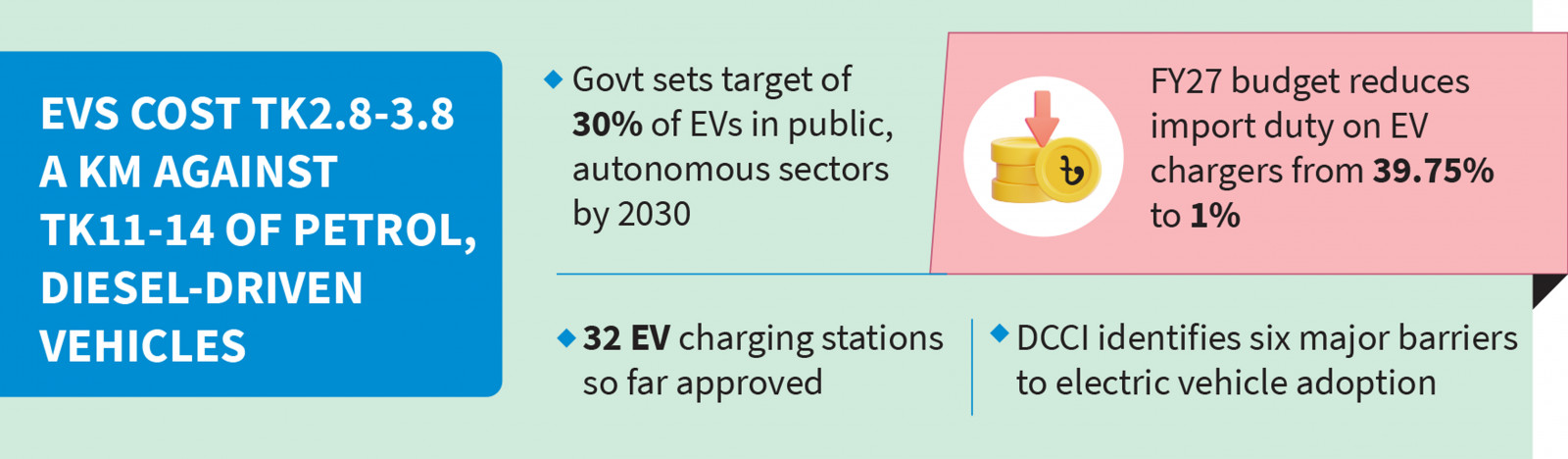
The government aims to ensure that 30% of vehicles in the public and autonomous sectors are electric by 2030.

Electric vehicles can reduce transport operating costs by up to 75% compared with conventional fossil fuel-powered vehicles but their transition remains constrained by persistent electricity shortages and the absence of a coordinated policy framework, according to a study presented by the Dhaka Chamber of Commerce and Industry.
The findings were unveiled at a seminar, "The Electric Vehicle: Challenges and Prospects in Bangladesh," jointly organised by the Dhaka Chamber and the Bangladesh Sustainable and Renewable Energy Association today (27 June).
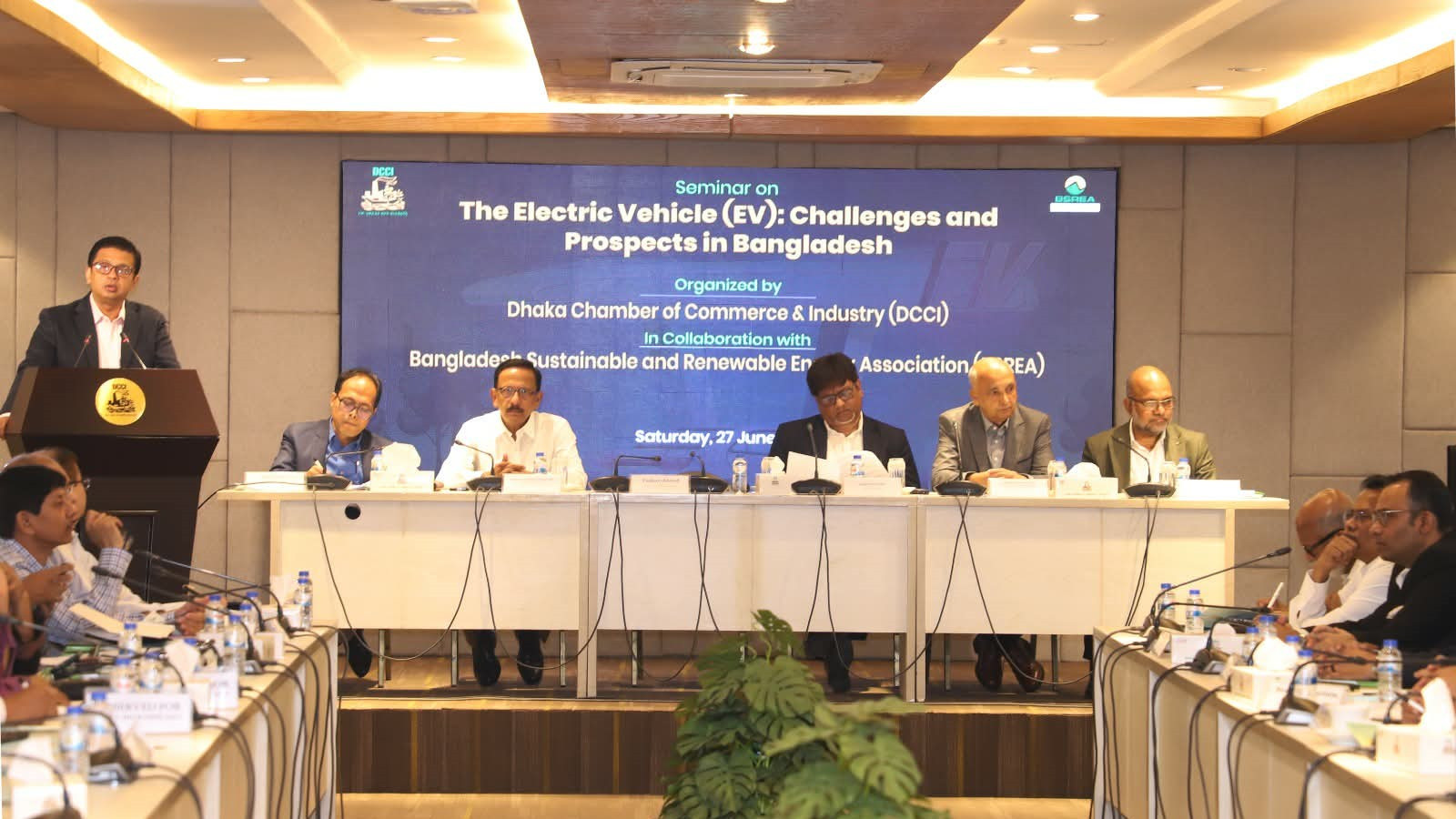
Presenting the keynote paper, Dhaka Chamber president Taskeen Ahmed said Bangladesh has introduced several fiscal incentives to promote EV adoption but major structural bottlenecks continue to discourage investment and consumer uptake.
"Reliable electricity supply, a nationwide charging network, battery management systems, technical standards and greater private sector participation are essential to unlock the industry's potential," he said.
 Keep updated, follow The Business Standard's Google news channel
According to the paper, Bangladesh has only 669 registered EVs, excluding electric three-wheelers, out of a total registered vehicle fleet of 6.72 million.
The government aims to ensure that 30% of vehicles in the public and autonomous sectors are electric by 2030, but the current pace suggests substantial policy and infrastructure gaps.
The study estimates that EVs cost Tk2.8-3.8 per kilometre to operate, compared with Tk11-14 per kilometre for petrol and diesel vehicles. Maintenance costs are also 30-50% lower, making those vehicles economically attractive over the long term despite their higher upfront prices.
However, the business body identified six major barriers to EV adoption: inadequate charging infrastructure, high purchase costs, insufficient bus depots, weak battery safety and recycling systems, uncertain investment payback periods and, most importantly, Bangladesh's ongoing energy crisis.
Although recent budgets have introduced several incentives, including reducing import duty on EV chargers from 39.75% to 1%, lowering advance income tax on EV registration, increasing auto loan limits for electric and hybrid vehicles to Tk80 lakh, and extending VAT exemptions on locally assembled EVs until 2031 industry leaders believe fiscal incentives alone will not be enough.
Drawing lessons from global experience, the paper cited Norway, where EVs account for 97.4% of new vehicle sales, attributing its success to long-term tax incentives, toll exemptions and widespread use of renewable energy.
To accelerate adoption, the business organisation recommended a phased national roadmap centred on local manufacturing of two- and three-wheelers, deployment of 300-500 electric buses in Dhaka and Chattogram on a pilot basis.
The chamber also noted that the government is formulating a national energy storage roadmap to support renewable energy integration and EV battery systems.
Calls for coordinated policy
Speaking as the chief guest, Bangladesh Energy and Power Research Council Chairman Mohammad Wahid Hossain stressed that uninterrupted electricity supply is the single most important prerequisite for EV adoption.
He also proposed establishing a dedicated inter-agency coordination body for the EV sector, noting that multiple government agencies are currently involved in policymaking and implementation.
Industries Secretary Abdun Naser Khan said the government has already prepared a draft EV policy following consultations with relevant ministries and stakeholders.
"The objective is to reduce dependence on imported fossil fuels while strengthening the country's energy security. A realistic and forward-looking EV policy will be finalised after incorporating stakeholders' feedback," he said.
Sustainable And Renewable Energy Development Authority Director Md Aminur Rahman said the authority has so far approved 32 EV charging stations, of which nine are already operational.
Bangladesh Automobile Assemblers and Manufacturers Association President and Runner Automobiles Chairman Hafizur Rahman Khan said developing local EV manufacturing and backward linkage industries could create new jobs and significantly boost exports.
Bangladesh Sustainable and Renewable Energy Association President Mostafa Al Mahmud noted that greater EV adoption could substantially reduce fuel imports and save foreign exchange.
Buet Professor Dr Md Ehsan said the rapid growth of electric three-wheelers has already reduced diesel imports by an estimated 1.5 million tonnes annually, demonstrating the sector's economic potential if supported through a comprehensive policy framework.
At the end of the seminar, the chamber and the energy association signed a memorandum of understanding to collaborate on energy policy advocacy, innovation and market development for the EV sector.