Matarbari Tales: Art, memory and life on a coast under pressure
An exhibition rooted in a coastal village facing rapid industrial change, Matarbari Tales uses art, craft and storytelling to record everyday life while raising difficult questions about development, visibility and what is left behind

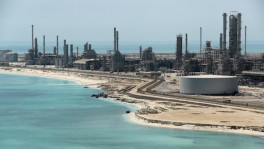
In Matarbari, people are learning to live with uncertainty. Land has changed hands, the sea has moved closer, and long-term development plans have arrived faster than residents could properly process. What was once a fishing village now exists alongside power plants and port plans.
On paper, it is a strategic location on the coast of Cox's Bazar. On the ground, it is a village living through slow disruption, where what is being lost rarely fits into development briefings.
Matarbari Tales – Home Is Where the Heart Is begins from this place. Supported by the British Council's Climate Futures: South Asia programme and curated by Mahenaz Chowdhury, the project works through photography, film, painting, kantha stitching, weaving and writing to record everyday life in a community affected by rapid industrialisation.
 Keep updated, follow The Business Standard's Google news channel
Before arriving in Dhaka, the exhibition began at Matarbari High School in Cox's Bazar on 11 December. The main event then travelled to Dhaka, opening at Dwip Gallery Dhaka on 13 December. The exhibition ran until 16 December.
Despite the gravity of Matarbari's ongoing struggles — the uncertainty, displacement and long-term consequences of rapid industrialisation — the exhibition space feels light. The colours, the gathering of people and the sense of occasion give the impression of celebration rather than a site marked by upheaval.
The project brings together several strands. There is a large textile map of Matarbari, made through kantha stitching collectively by the women of Matarbari, with design and direction provided by the Matarbari artist team.
There are two short films, The Banyan Tree and Mystery Box, made by students of Matarbari High School after a series of workshops conducted with Applebox Films. There is also Matarbari Tales, a short story collection written by the students and launched alongside the exhibition, as well as a research review titled Stitching Memories of Matarbari: A Participatory Approach to Rewriting Development Imaginaries.
At Dwip Gallery, the textile map immediately catches the eye. It occupies the wall directly opposite the entrance. Through stitching, it marks land, water and movement, turning geography into something tactile and slowly forming a kind of memory map that portrays daily activities once central to everyday life in Matarbari.
The films are simple in form. Shot and edited by the students, they stay close to their surroundings — trees, rooms, small gestures, moments that quietly reflect their lifestyle and routine activities. They feel less like statements and more like careful acts of looking. These are not films made for spectacle, and within a gallery context their intimacy stands out.
During the Dhaka opening, students read from their stories. The writing is raw, natural and direct, shaped largely by observation, imagination and lived experience in Matarbari. Hearing these texts read aloud in a gallery space shifts the atmosphere of the room.
For Mahenaz Chowdhury, the project is about building a record that development narratives usually erase. "My goal is to amplify the lived experiences of coastal communities impacted by rapid industrialisation and climate change through art, story and shared memory," she says. "The exhibition proves that every story told, every stitch placed, is an act of defiance and a vital step in mapping Matarbari's future."
Her curatorial practice has long engaged with craft, memory and collaboration, and Matarbari Tales follows that trajectory. The emphasis here is on participation — on making work with the community rather than about it. Students learned to write, film and handle equipment. Women from Matarbari contributed to the textile work. The process itself is positioned as meaningful, yet walking through the exhibition, a dissonance emerges.
Despite the gravity of Matarbari's ongoing struggles — the uncertainty, displacement and long-term consequences of rapid industrialisation — the exhibition space feels light. The colours, the gathering of people and the sense of occasion give the impression of celebration rather than a site marked by upheaval.
This is where the project becomes complicated. Representation, especially of suffering, is never straightforward. There is a gap between visibility and consequence. While it matters that a child in Matarbari touched a camera for the first time, it is difficult to say what that moment becomes once the workshop ends.
While it matters that women's craft travels to Dhaka, it is unclear how much material support follows. How sustained are these engagements once the exhibition closes and the audience disperses?
The hope, of course, is that something remains. That the child who held a camera might imagine a future shaped by that encounter. That the women whose stitching appears in Dhaka might find new networks, new possibilities of connection or income. That visibility might eventually lead to opportunity. But hope, here, is fragile. It cannot be measured or guaranteed.
Perhaps the exhibition's most tangible impact lies in the possibility that a privileged audience might pause to reconsider what development costs, and who bears that cost. If Matarbari Tales succeeds in unsettling complacency, in making viewers aware that progress is uneven and often violent in its ways, then it performs an important function.