Bridge the gap | The Business Standard
Skip to main content
  • Latest
  • Economy
    • Banking
    • Stocks
    • Industry
    • Analysis
    • Bazaar
    • RMG
    • Corporates
    • Aviation
    • Energy
  • Videos
    • TBS Today
    • TBS Stories
    • TBS World
    • News of the day
    • TBS Programs
    • Podcast
    • Editor's Pick
  • World+Biz
  • Features
    • Panorama
    • The Big Picture
    • Pursuit
    • Habitat
    • Thoughts
    • Tales from the Edge
    • Splash
    • Mode
    • Tech
    • Explorer
    • Brands
    • In Focus
    • Book Review
    • Earth
    • Food
    • Luxury
    • Wheels
  • Subscribe
    • Get the Paper
    • Epaper
    • GOVT. Ad
  • More
    • Sports
    • TBS Graduates
    • Bangladesh
    • Supplement
    • Infograph
    • Explainer
    • Archive
    • Gallery
    • Long Read
    • Interviews
    • Offbeat
    • Magazine
    • Climate Change
    • Health
    • Cartoons
  • বাংলা
The Business Standard

Bridge the gap

Bangladesh rose on the ‘flying geese’ paradigm. Like the flight pattern of the geese where the leader becomes tired and the followers take its position, Bangladesh also eventually advanced, riding on its low wage advantage
Bridge the gap

Anniversary

Inam Ahmed & Shakhawat Liton
19 January, 2021, 11:55 pm
Last modified: 20 January, 2021, 12:33 am

Related News

  • Fiscal year shift to April-March: Govt seeks time-bound plans to revise laws, regulations, and systems
  • Bangladesh seeks $4.5b IMF loan in 6 instalments through 2029
  • 'Taking sides in other parties' internal disputes goes against principles': AB Party suspends Cumilla convener over Jamaat office clash
  • Shahjalal Islami Bank's Q3 earnings rise 21%
  • Durga Puja: BGB setting up 18 base camps to secure 1,800 border-area puja mandaps

Bridge the gap

Bangladesh rose on the ‘flying geese’ paradigm. Like the flight pattern of the geese where the leader becomes tired and the followers take its position, Bangladesh also eventually advanced, riding on its low wage advantage

Inam Ahmed & Shakhawat Liton
19 January, 2021, 11:55 pm
Last modified: 20 January, 2021, 12:33 am

Poor countries that lag behind technology progress can witness growth spurt driven by rapid productivity catch-up, Harvard University development economist Lant Pritchett had pointed out in 1997 in his epic article "Divergence, Big Time" in the journal of the American Economic Association.

From there what path they will take depends on their institutions. They can become South Korea and Singapore. Or turn into Thailand and the Philippines. The growth spurt can fizzle out to great torpor.

Much of the world now shows this divergence rather than convergence of income.

The Business Standard Google News Keep updated, follow The Business Standard's Google news channel

For Bangladesh, that time has arrived now to pick a path after it has been on that growth trajectory. It can choose any direction and become anything, depending on whether it can bridge the gaps that are still widely gaping, as the Planning Commission aptly conceptualised two years ago when it prepared the concept paper for the Eighth Five-year Plan.

Two men are working at a construction site of the Elevated Expressway at Abdullahpur in the capital. The work resumed amid the relaxed shutdowns, but the workers have little or no protection from the coronavirus. Photo: Mumit M/TBS

The ambition is however tantalisingly remunerative – to become an upper-middle-income country in the next ten years.

There is nothing that can stop Bangladesh from reaching that goal if these gaps can be bridged. Otherwise, the outcome can be another Seventh Five-Year Plan.

The path to that goal is easy to spell out – industrialise rapidly and grab the export market taking advantage of the global market and become part of the global supply chain in a convergence model. China is the bright example of such success to become the second largest economy so fast.

But that convergence is not a guaranteed outcome; Latin America and Africa are stark examples.

Bangladesh rose on the "flying geese" paradigm. Like the flight pattern of the geese where the leader becomes tired and the followers take its position, Bangladesh also eventually advanced, riding on its low wage advantage.

Photo: Saikat Bhadra /TBS

But like the geese on a flight, the position is not permanent unless the gaps are filled in. Or even worse, a country gets stuck in the dregs of industrial work just like Ethiopia where wages are much lower than even those in Bangladesh.

If we go back to the Eighth Five-Year Plan concept paper, we know where the risks lurk for Bangladesh. Top on the list is weakness in revenue collection that is too inadequate to support the huge infrastructure needs of the country.

There is hardly any need to explain how infrastructure can be the game changer. The Bangabandhu Bridge over the Jamuna is an example. In a study by Prof Abdul Bayes in 2007 – about a decade after the bridge was opened, it has been shown that per capita income in the villages benefited by the bridge rose by 3% per annum against less than 1% for those falling outside the realm of the bridge.

More than 35 crore textbooks were distributed among around 4.27 crore pre-primary, primary, ebtedayee, secondary, dakhil, dakhil (vocational), and secondary school certificate (vocational) students this year. Photo: Rehman Asad/TBS

A study of the Asian Development Bank on the Padma bridge has said this infrastructure will "result in remarkable improvement of accessibility to/from other important cities and core facilities on the opposite side of the Padma river". The bridge will boost both domestic and international trade.

But such mega projects drag on with resulting cost escalation, and the economic return naturally tapers off.

Bangladesh needs more of such infrastructure but "limited government resources may not be adequate to meet the growing demand for expenditures in infrastructure, agriculture, water resources, health, education and social safety," the Planning Commission had observed. As a result, the ambition of becoming an upper-middle-income country by 2031 may remain a dream, the government organ felt.

But the crucial needs for Bangladesh are to improve its education and health systems.

Workers at an RMG factory. File Photo: Mumit M.

Cheap labour is no more a guarantee for industrialisation, otherwise rising wages in emerging Asia would have turned global industries to Africa. In most African countries, wages are still between one-third and half of those in emerging countries. And yet money is not flowing into that continent.

For Bangladesh, the future will lie in better skilled people, people whose productivity is more per capita in terms of value. A Swedish worker is ten times more productive than his Bangladeshi counterpart. 

Mohammad Iddris welding a motor span at his shop at Sattar Khan Dockyard in South Keraniganj of Dhaka. He opened the shop and resumed work amid the relaxed lockdowns. Photo: Mumit M/TBS

But in both education and health, the gap here is wide. Consider the fact that 32% of our labour force has no education with only 26% having primary level and 19% having secondary level education.

Such poorly educated manpower is simply not compatible with the dream of becoming an upper-middle-income country. The Global Knowledge Index last year that placed Bangladesh at number 112 (Thailand was 54, Malaysia 33, Indonesia 81 and China 31) showed how wide the gap is.

Talking about ranks, Bangladesh needs to go over great lengths to close the gaps on other indexes too, such as Ease of Doing Business (ranked 168), Global Competitiveness Index (ranked 105), Human Capital Index (ranked 123) and so on.

The gaps may be wide but with a stable government and right institutions they can be filled.


Bangladesh / Top News

gap / development / bridge / Economy / Bangladesh

Comments

While most comments will be posted if they are on-topic and not abusive, moderation decisions are subjective. Published comments are readers’ own views and The Business Standard does not endorse any of the readers’ comments.

Top Stories

  • Representational image. Photo: Collected
    Bangladesh seeks $4.5b IMF loan in 6 instalments through 2029
  • Photo: AI generated
    Malaysia begins recruiting process of Bangladeshi workers thru 338 agencies: Expat ministry
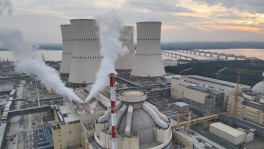
  • Global nuclear energy is undergoing a historic renaissance to meet surging 24/7 power demands, ensure grid security and achieve net-zero targets. File Photo: TBS
    Attempt underway to add 300MW from Rooppur plant to national grid by Nov: Faqir Mahbub

MOST VIEWED

  • A view of the Saudi Arabia Ministry of Interior. Photo: Jon Rawlinson/Courtesy
    Saudi Arabia executes two Bangladeshis over 'immoral act' inside mosque
  • File photo of workers at a readymade garment factory in Dhaka. Photo: Rajib Dhar/TBS
    Govt moves to form RMG wage board amid Tk30,000 minimum pay demand
  • Photo: Collected
    Govt to stop buying power at rates above average tariff
  • The restrictions reportedly apply to citizens of 31 countries. (File Photo / Representational Image)
    Air France to follow Israel's ban on airline crew from Bangladesh, Pakistan, 29 other countries: Report
  • Garment workers stage a rally in Uttara’s Azampur area, demanding higher wages and blocking roads, causing severe traffic congestion on 15 October. Photo: Courtesy
    Police fire tear gas as RMG workers block Dhaka-Mymensingh highway for fourth day
  • Actor Imran Khan has been detained in Mumbai today, 10 October 2026. Photo: Raju Shinde/HT
    Actor Imran Khan asked to leave India by 28 October after taking part in anti-CEC protests in Mumbai

Related News

  • Fiscal year shift to April-March: Govt seeks time-bound plans to revise laws, regulations, and systems
  • Bangladesh seeks $4.5b IMF loan in 6 instalments through 2029
  • 'Taking sides in other parties' internal disputes goes against principles': AB Party suspends Cumilla convener over Jamaat office clash
  • Shahjalal Islami Bank's Q3 earnings rise 21%
  • Durga Puja: BGB setting up 18 base camps to secure 1,800 border-area puja mandaps

Features

How should we prepare our students in the age of AI?

How should we prepare our students in the age of AI?

11h | Thoughts
A Tk31 lakh culvert bridge over the Banshgada canal in Satkhira’s Dholihar has been out of service for six years as the approach roads at both ends remain unfinished. Photo: TBS

Beyond approval: Turning Bangladesh’s development promises into results

11h | Thoughts
Illustration: TBS

Young, online and on the streets

4h | The Big Picture
One last serving of puja magic

One last serving of puja magic

11h | Food

More Videos from TBS

Can Trump rein in Iran using the ‘Mother of All Bombs’?

Can Trump rein in Iran using the ‘Mother of All Bombs’?

7h | Others
Will the government be able to meet the conditions of the IMF loan?

Will the government be able to meet the conditions of the IMF loan?

7h | Podcast
Ohio working-class voters reconsider Trump amid rising prices and Iran war

Ohio working-class voters reconsider Trump amid rising prices and Iran war

5h | TBS English
Why is Starlink facing strict restrictions in Iran?

Why is Starlink facing strict restrictions in Iran?

6h | Others
The Business Standard
Top
  • Home
  • Entertainment
  • Sports
  • About Us
  • Bangladesh
  • International
  • Privacy Policy
  • Comment Policy
  • Contact Us
  • Economy
  • Sitemap
  • RSS

Contact Us

The Business Standard

Main Office -4/A, Eskaton Garden, Dhaka- 1000

Phone: +8801847 416158 - 59

Send Opinion articles to - oped.tbs@gmail.com

For advertisement- sales@tbsnews.net

Copyright © 2026 THE BUSINESS STANDARD All rights reserved. Technical Partner: RSI Lab