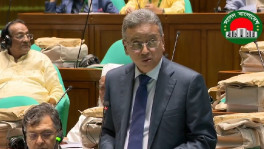
Bangladesh, China's Fujian forge G2G partnership to modernise agriculture
Both sides agree to deepen cooperation in fertiliser supply, hybrid rice, agro-processing and solar irrigation, while moving to renew the DAP fertiliser agreement ahead of the peak procurement season.

Highlights:
- Bangladesh, Fujian agree on G2G agriculture partnership
- DAP fertiliser deal renewal to be expedited
- Hybrid rice, agro-processing cooperation planned
- Fujian backs solar irrigation initiative
Bangladesh and China's Fujian Province have agreed to establish a government-to-government (G2G) partnership to modernise Bangladesh's agriculture sector through technology transfer, research collaboration and investment.
The agreement was reached during high-level talks at the Bangladesh Secretariat yesterday (8 July), where both sides discussed cooperation in fertiliser supply, hybrid rice, agro-processing, renewable energy, aquaculture and rural development.
 Keep updated, follow The Business Standard's Google news channel
The Bangladeshi delegation was led by Agriculture Minister Amin Ur Rashid Yasin, Agriculture Secretary Rafiqul Islam Mohammad and Bangladesh Agricultural Development Corporation (BADC) Chairman Md Azizul Islam. The Chinese delegation was headed by Lin Guoshan, secretary of the CPC Party Leadership Group and director of the state-owned Fujian Provincial Supply and Marketing Cooperative.
A key outcome of the meeting was the decision to expedite the renewal of the existing G2G agreement with Chinese Banyan International Trading Limited for the supply of di-ammonium phosphate (DAP) fertiliser.
According to meeting sources, the Chinese side urged Bangladesh to complete the renewal process within this month to ensure uninterrupted fertiliser supplies ahead of the country's peak procurement season in September and October.
The Ministry of Agriculture said the renewal process has already begun and the required government approvals are expected soon. Officials said maintaining a stable fertiliser supply is vital for sustaining agricultural production and ensuring food security.
The two sides also agreed to expand cooperation in agricultural innovation through joint research, advanced seed development, farm mechanisation, agro-processing, cold-chain logistics and commercial aquaculture.
Bangladesh expressed interest in introducing Fujian's high-yield hybrid rice varieties, which can produce up to 3.67 tonnes of paddy per acre under optimal conditions.
The discussions also covered value-added agro-processing, with Bangladesh seeking Chinese expertise to develop export-oriented products such as dried jackfruit chips. Fujian agreed to facilitate technology transfer and technical exchanges in food processing and cold-chain logistics.
Renewable energy featured prominently in the talks as Bangladesh outlined its plan to convert more than 200,000 irrigation pumps to solar power, a move expected to save nearly $1 billion annually in fuel imports. Fujian expressed willingness to support pilot projects, provide technical expertise and explore financing opportunities.