The business of beauty: Botox, fillers, and the rise of aesthetic medicine in Dhaka
Dhaka’s aesthetic medicine industry is quietly booming. It reflects changing beauty standards, social media influence, and rising demand for cosmetic treatments. However, it also raises questions about regulation, safety, and the pressures shaping modern self-image

Walk through the streets of Dhaka, and you will find rows of commercial buildings lining the roads, each housing several restaurants spread across multiple floors. For the past two decades, this has been a defining feature of the city's urban landscape.
What is more recent, however, is the rise of another kind of business. Alongside the restaurants, beauty salons with sleek, carefully curated interiors have quietly taken up residence in these buildings. More recently still, laser and aesthetic treatment centres have become a common sight, carving out their own space in the city's rapidly expanding commercial hubs.
It is not uncommon to step into a building intending to dine at a restaurant, only to press the wrong lift button and find yourself in the reception area of a laser aesthetic clinic.
 Keep updated, follow The Business Standard's Google news channel
Over the past two decades, Dhaka has undergone a remarkable transformation. Commercial buildings have mushroomed across almost every corner of the city, reshaping its skyline and streetscape. As dining out and socialising have become integral to urban life, aesthetic treatments, too, have moved into the mainstream. Once considered a luxury for a select few, they have increasingly become part of the everyday routines of city dwellers.
Beauty as maintenance, not vanity
People say beauty is subjective. Neelima (not her real name) isn't so sure.
"Beauty has always had privilege. If you can afford to enhance it, why wouldn't you?" said the 35-year-old Dhaka-based private sector employee.
She has undergone Botox and microneedling treatments for several years now. She does not consider them vanity procedures. To her, they belong in the same category as a gym membership or a skincare routine—investments in maintenance rather than transformation. When she first told her friends, a few were surprised. Most, she says, eventually asked for the clinic's number.
Her experience reflects a broader trend. Beauty parlours that once defined the city's self-care culture—offering threading, facials, hair treatments, and bridal makeovers—are increasingly sharing space with a new generation of establishments.
In neighbourhoods like Dhanmondi, Gulshan, Mirpur, and Uttara, frosted glass doors open into sleek clinics offering Botox, dermal fillers, laser treatments, and platelet-rich plasma (PRP) therapy.
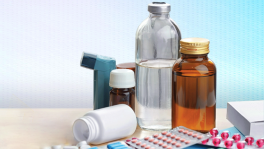
Botox relaxes facial muscles to smooth wrinkles. Fillers restore lost volume to the lips, cheeks, and jawline. PRP uses the patient's own blood, which is reinjected to stimulate collagen production and improve skin texture from within.
Their branding is often presented in English and frequently incorporates elements associated with Korean beauty trends, which have gained popularity among consumers in Bangladesh.
The result is a rapidly expanding market where competition is intensifying and treatments are becoming increasingly accessible. Procedures that once carried an air of exclusivity are now marketed to mid-level professionals, university students, and young professionals, many of whom can afford to fit a Botox appointment into both their schedules and their budgets.
The transformation reflects broader shifts in consumer behaviour and attitudes towards beauty and self-care.
Who are the people filling appointment books at these clinics? How much are they spending, and what motivates them to seek these treatments?
The answers reveal a story that goes far beyond beauty. It is a story about changing aspirations, the influence of social media, evolving ideas of ageing, and a rapidly expanding industry that is quietly reshaping how Dhaka thinks about appearance, confidence, and self-improvement.
The aesthetic economy
The country's beauty and personal care market is already estimated to be worth around Tk10,000 crore (approximately $1.29 billion). Aesthetic medicine is emerging as one of its most dynamic sectors. Just a decade ago, treatments such as Botox injections, fillers, and advanced laser procedures were difficult to find in Bangladesh. Today, they are marketed as routine maintenance appointments that can be scheduled between office meetings or during a lunch break.
Practitioners say the appeal lies partly in convenience. Tasnim Aurpa, an aesthetic physician at Estee Medical Bangladesh, says many non-surgical procedures, including Botox and fillers, can often be completed in around two hours, allowing clients to fit appointments into their workdays with minimal disruption.
Aesthetic medicine has become one of Bangladesh's fastest-growing industries, though it remains relatively underexplored in public discourse.
Beauty in the age of algorithm
Bangladesh is not an outlier. It is part of a global beauty boom. The global aesthetic medicine market was valued at $6.21 billion in 2025 and is projected to reach $12.57 billion by 2032.
At the same time, Korean beauty culture has become increasingly influential in Bangladesh. K-drama stars with flawless skin and sculpted features have become aspirational figures, replacing the Bollywood beauty ideals that dominated previous generations.
Social media has accelerated the trend. Clinics that once relied on word-of-mouth recommendations can now build a clientele through Instagram and TikTok alone.
"These treatments are becoming more popular and more affordable at some centres," said Dr Tasnim. "Middle-class clients are beginning to access them as well," she added.
According to Dr Tasnim, most clients at her clinic are between 25 and 30 years old, although the age range extends well into the fifties and beyond.
"Most of our clients are from upper-income groups," she said, adding that lower-cost providers are gradually making some treatments more accessible to middle-class consumers.
A growing appetite for aesthetics
"I think of it the same way I think of colouring my hair," said Tanha, 43, a finance professional in Gulshan who has been receiving Botox treatments for three years. "It is maintenance. It is just that nobody talks about it very often."
As aesthetic clinics continue to multiply, cosmetic medicine has become one of the more attractive career options for young doctors as well.
If Botox makes someone feel good, they can choose it. However, it should not come from a place where happiness depends on other people's approval.
"I've always been interested in skincare," said Tasnim Aurpa, who entered the field after completing her MBBS. "I felt that aesthetic medicine is a growing field, so I decided to build my career here."
Drawn by regular working hours and fewer emergency demands, many are opting for careers in cosmetology, swelling the ranks of practitioners entering the industry each year.
Aesthetic treatments are now increasingly affordable even for people with mid-range salaries in Dhaka, as the growing number of clinics and package-based offers has created more flexible entry points into cosmetic procedures that were once considered luxury services.
A single Botox session at a mid-range clinic in Dhaka typically costs between Tk8,000 and Tk20,000, while full-face packages combining Botox, fillers, and thread lifts can cost Tk40,000 to Tk60,000 at physician-led clinics. Lower-priced offers exist in the market, but they often raise concerns about product quality and safety standards.
"We use Allergan Botox, Juvéderm fillers, and Korean products, which are also very popular among patients," said Anzoman of Vitaskin Gulshan. "Botox, fillers, and thread lifts can be completed in a single session, and the results generally last around six months before a touch-up is needed."
Regulation and safety concerns
Dr Sharmin Akhter Sumi, Associate Professor and Head of Plastic Surgery at Dinajpur Medical College, said, "Botox, fillers, glutathione, and other injectable cosmetic procedures are regulated under the Drug and Cosmetics Act, 2023, and related laws, and cannot be performed without the supervision of a BMDC-registered physician. However, there is still no separate government registration system specifically for injectable aesthetic procedures."
These are not minor distinctions. Botox is a neurotoxin. Fillers are injected near major blood vessels, where incorrect technique can cause vascular occlusion, skin necrosis and, in rare but documented cases, vision loss. PRP requires drawing blood. The gap between what these procedures are medically and how they are presented commercially as routine, low-risk beauty appointments is precisely what makes the absence of a dedicated regulatory framework significant.
The regulatory picture is further complicated by the status of medicated cosmetics, a category that includes many products commonly used in aesthetic treatments.
According to Dr Md Akter Hossain, Director of the Directorate General of Drug Administration (DGDA), medicated cosmetics previously entered the market after being tested by BSTI, but there was no dedicated registration system governing them.
Recognising the need for stronger oversight, the government later brought medicated cosmetics under the Drug and Cosmetics Act.
However, Dr Hossain noted that the rules required to enforce the law have yet to receive ministerial approval.
"The law has already been enacted, but the implementing rules have been sent to the ministry and are still awaiting approval," he said. "Until those rules are approved, we cannot begin the full registration and regulatory process."
As a result, consumers are often left with little way of knowing whether an aesthetic treatment is authentic, whether the concern is the credentials of the person holding the syringe or the medicine inside it.
The pressure to perform
The conversation playing out in Dhaka's aesthetic clinics has a public face as well.
When actress Bipasha Hayat, a celebrated artist and cultural figure in her fifties, appeared recently with her white hair, the response was swift and revealing. Social media fractured along predictable lines. Some called her old. Some praised her grace. Others held her up against Jaya Ahsan, a peer of similar age, as evidence of what a woman of that generation should look like if she is trying hard enough.
The comparison was framed as aesthetic. It was, of course, about something else entirely—the persistent, exhausting idea that a woman's appearance is not merely one aspect of who she is, but the primary measure of her worth. Neither woman asked to be part of the debate. They rarely do.
Ironically, even as aesthetic clinics continue to proliferate, many people still prefer not to talk openly about cosmetic procedures and tend to keep their treatments private.
When a woman who allows her hair to go white becomes a public referendum—when her face becomes a debate that audiences feel entitled to adjudicate—the choice to sit in a clinic chair begins to look less like vanity and more like self-defence.
Psychiatrist Dr Mekhala Sarker says concerns arise when self-worth becomes closely tied to appearance or external validation.
"We currently live in the age of social media, which strongly influences our mindset and sense of self," she said.
While aesthetic treatments can be a personal choice, she noted that problems may emerge when individuals feel compelled to maintain a youthful appearance primarily to meet others' expectations.
"If Botox makes someone feel good, they can choose it," she said. "However, it should not come from a place where happiness depends on other people's approval," Dr Mekhala added.
In this context, some people view aesthetic treatments not as acts of vanity but as part of their approach to self-care, confidence, or professional presentation. While the aesthetic industry did not create these expectations, it has expanded in response to changing consumer preferences and growing demand.
The Instagram pages keep growing. The clinics keep multiplying. So do the appointments. For a growing number of people in this city, this is simply part of what it means to be here, in this body, at this particular moment.