What is US birthright citizenship, who benefits from the SC ruling?
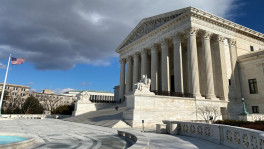
The US Supreme Court has reaffirmed one of the country's oldest constitutional protections by striking down President Donald Trump's attempt to end automatic citizenship for many children born on American soil.

Highlights
- US Supreme Court upholds constitutional guarantee of birthright citizenship in a 6-3 ruling
- Trump's executive order seeking to restrict automatic citizenship declared unconstitutional
- Children born in the US to undocumented immigrants and most temporary visa holders remain eligible for citizenship
- Ruling reaffirms a constitutional principle in place for more than 125 years
The US Supreme Court has ruled that children born in the United States remain entitled to American citizenship regardless of their parents' immigration status, rejecting President Donald Trump's attempt to narrow the constitutional guarantee of birthright citizenship.
In a 6-3 decision, the court held that Trump's executive order, signed on 20 January 2025, violated the Citizenship Clause of the US Constitution's 14th Amendment, which has long been interpreted to grant citizenship to almost everyone born on American soil, reports Reuters.
 Keep updated, follow The Business Standard's Google news channel
Birthright citizenship is the legal principle under which a person automatically becomes a citizen of a country simply by being born within its territory. In the United States, that right is guaranteed by the 14th Amendment, adopted in 1868 after the Civil War to ensure citizenship rights for formerly enslaved people.
It states that "all persons born or naturalized in the United States, and subject to the jurisdiction thereof, are citizens of the United States."
For more than a century, this constitutional protection has applied to nearly everyone born in the country, regardless of their parents' nationality or immigration status. The only widely recognised exceptions are children born to foreign diplomats, who are not considered subject to US jurisdiction.
Trump's executive order sought to fundamentally change that long-standing interpretation. Under his proposal, children born in the United States would not automatically receive citizenship if neither parent was a US citizen or lawful permanent resident. That would have affected babies born to undocumented immigrants, international students, temporary workers, tourists and many other foreign nationals legally or illegally present in the country.

Although Trump signed the order on his first day after returning to office as part of a broader immigration crackdown, it never took effect because it was immediately blocked by lower federal courts.
The Supreme Court's ruling means that those children will continue to receive US citizenship at birth.
The decision benefits not only families currently living in the United States on temporary visas or without legal status but also future children born under similar circumstances, preserving a constitutional right that has existed for generations.
Writing for the majority, Chief Justice John Roberts said there was "scant evidence" supporting the Trump administration's argument that the Citizenship Clause should be interpreted more narrowly, reports NBC News.
He said the court saw "no reason to depart" from its landmark 1898 ruling in United States v Wong Kim Ark, which established that a child born in the United States to foreign parents was entitled to US citizenship under the Constitution.
Roberts noted that for 128 years the Supreme Court had consistently interpreted the 14th Amendment in the same way. He added that if Congress had intended to restrict citizenship only to children of citizens or permanent residents, the Constitution would have said so explicitly.
The court was divided 6-3. While the majority ruled that Trump's order violated the Constitution, Justices Clarence Thomas, Samuel Alito and Neil Gorsuch dissented, arguing that the 14th Amendment could allow a narrower interpretation. Justice Brett Kavanaugh took a separate position, saying the executive order violated federal law, though not necessarily the Constitution.
The decision marks another significant legal setback for Trump. It follows the Supreme Court's earlier rulings striking down his sweeping tariff policy and blocking another major executive action involving the Federal Reserve.
Civil rights groups welcomed the judgment, saying it reaffirmed a fundamental constitutional principle. Cecillia Wang, national legal director of the American Civil Liberties Union, which represented families challenging the order, said the ruling confirmed that "if you are born here, you are a citizen" and that no president can change the Constitution through an executive order.
The decision ensures that birthright citizenship remains intact in the United States, meaning any future attempt to restrict it would almost certainly require a constitutional amendment rather than unilateral executive action.