International Women’s Day 2026: Her voice, her rights
What’s needed are not promises, but practical steps, clear plans, and real results. With political will and coordinated action, this moment can become a true turning point

International Women's Day 2026 comes at a crucial time for Bangladesh. The country has recently experienced a major political shift following the July uprising and the 13th National Parliamentary Election. Even during this time of transition, many women and girls continue to face violence, discrimination, economic pressure, and limited space in politics.
This year's global theme, announced by the United Nations, "Rights. Justice. Action. For ALL Women and Girls," speaks directly to Bangladesh's current reality. It is more than a slogan. It calls for protecting women's rights in law and practice, ensuring justice through accountable institutions, and taking concrete actions so that policies truly improve the everyday lives of women and girls.
Women and the July Uprising
 Keep updated, follow The Business Standard's Google news channel
The July uprising became an important turning point in Bangladesh's recent political history. Women and girls were not just participants. They played a leading role.
Women university students helped starts the protests. They organised online campaigns and stayed active in demonstrations. Women journalists, lawyers, and activists spoke out for justice and reform. Many women protesters also supported injured demonstrators and helped manage communication and supplies.
Their strong presence showed a clear change in mindset. Young women, especially from colleges and universities, spoke up with confidence and claimed their political space. It was a powerful reminder that women are not just beneficiaries of democracy. They help shape it.
Yet after the uprising, women's leadership was not equally reflected in reform efforts. Their representation in advisory and reform committees remained limited. This gap shows that recognition is not enough. Women's participation must be ensured in decision-making spaces as well.
Women in reform committees
After the uprising, women were included in some reform committees and transitional bodies, but their overall participation was still limited. A few well-known academics, lawyers, and activists joined, yet the numbers did not reflect real gender balance and overall representation remained far below true gender balance
Among the 11 commissions formed by the interim government, the Women's Affairs Reform Commission drew the most attention. It proposed 433 recommendations in 15 areas to remove discrimination against women. Some of these proposals were criticised as "anti-religious," and there were even demands to dissolve the commission.
This shows a bigger problem. Women should not only be involved in issues labelled as "women's matters." They need a seat at the table in economic, constitutional, security, climate, and digital reforms too. Gender equality is not a side issue. Women's voices must help shape all major national policies that affect the whole country.
Women's Current Situation in Bangladesh
Violence against women and girls continued to be a major problem in Bangladesh in 2025. Bangladesh Mahila Parishad reported 2,808 cases, including 786 of rape and gang rape. Among the survivors, 543 were children, showing how vulnerable girls remain. Compared to 2024, the numbers increased, proving that laws alone cannot stop violence. Without strong enforcement, public awareness, and changes in social attitudes, legal protections are not enough.
Data from the Bangladesh Bureau of Statistics shows about 72% of ever-married women have faced some form of violence from their husbands. Many cases go unreported, especially in rural areas, meaning the true scale is likely higher. Safe reporting systems, survivor-friendly legal support, and mental health services remain limited, especially for marginalised groups. Real change requires stronger law enforcement and long-term social transformation.
Bangladesh still has one of the world's highest rates of child marriage. UNICEF reports that around 51% of women aged 20–24 were married before 18. Despite a National Action Plan to end child marriage, progress is slow and uneven. Child marriage is tied to poverty, lack of education, and violence. Early marriage often ends schooling, brings early pregnancy, and increases health risks. Girls become financially dependent and more vulnerable to abuse. Ending child marriage requires changing social attitudes, supporting families, and keeping girls in school.
Bangladesh has made major progress in girls' education over the past 20 years. Enrollment at primary and secondary levels is almost equal for girls and boys, and in some areas, girls now outnumber boys. Government support, stipends, free textbooks, and scholarships, has helped poor families send their daughters to school.
However, many girls still drop out after grade 8 due to poverty, household responsibilities, or child marriage. Safety concerns, long distances to school, harassment, and lack of digital access also limit learning, especially in rural and marginalized communities. At university, more young women are enrolling, mostly in cities, but few choose science or technology courses. Social pressure, limited guidance, and lack of mentors prevent many from pursuing careers. True progress means girls can stay in school, feel safe, and move into higher education and decent work.
In 2025, the government introduced reforms to improve justice for women and children. Fast-track tribunals were set up to speed up cases of sexual violence, and stricter penalties were promised. However, human rights experts stress that laws alone are not enough. Effective justice also requires safe reporting, witness protection, gender-sensitive investigations, and accountability for officials. Without these measures, survivors may only get justice if their cases receive public attention.
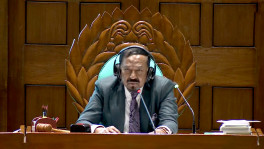
The 13th parliamentary election on 12 February 2026 showed that gender inequality in Bangladeshi politics remains strong. Although women make up nearly half of the population and voters, very few run for office or win. Of almost 2,000 candidates, under 4 percent were women, and only seven were directly elected, a drop from previous elections.
Bangladesh does have reserved parliamentary seats for women, assigned based on party performance, but these are not directly voted on by citizens. Women in these seats often rely on party leaders, which can limit their influence.
Women's voter turnout has been high, sometimes even higher than men's, yet this has not led to equal representation. The gap between women as voters and as elected leaders remains large.
From promises to action
After the 12 February 2026 election, the Bangladesh Nationalist Party (BNP) has formed the new government. People across the country now expect real change, especially for women and girls. There is hope, but there is also pressure. Citizens and civil society groups want to see clear action, not only public statements. We want the government to investigate all cases quickly, hold perpetrators accountable, and provide survivors with protection, medical care, legal aid, and counselling; appoint more women to leadership roles and ensure fair representation and meaningful participation; deliver free postgraduate education, keep girls in school, and prevent early marriage with scholarships, mentorship, and support programs; expand job opportunities, credit access, land rights, and digital skills so women can be financially independent; reflect gender equality in the budget, track progress, and publicly report results; and close legal loopholes and enforce strict protections for girls.
The new government's early actions will shape the future of women's rights. What's needed are not promises, but practical steps, clear plans, and real results. With political will and coordinated action, this moment can become a true turning point. The time to act is now.
Wasiur Rahman Tonmoy is the lead of Youth and Social Cohesion at Manusher Jonno Foundation. He can be reached at tonmoy@manusher.org.
Disclaimer: The views and opinions expressed in this article are those of the authors and do not necessarily reflect the opinions and views of The Business Standard.