Prioritise distributed renewable energy to cut fuel imports: Experts urges govt
Seminar calls for policy reforms, better financing and stronger institutional support for energy security.

Experts have urged the government to accelerate the adoption of distributed renewable energy, including rooftop solar and battery storage, to reduce Bangladesh's dependence on imported fuel as the country's energy crisis shows little sign of easing.
Expanding distributed renewable energy would strengthen energy security, lower import dependence and help address challenges in the power sector, they said at a seminar today (2 August), titled "Distributed Renewable Energy: The Future Solar Solution for Bangladesh".
Policy reforms, improved financing mechanisms and stronger institutional coordination are needed to unlock the sector's potential, they added at the event organised by the Economic Reporters Forum in collaboration with the Distributed Renewable Energy Platform in Dhaka.
 Keep updated, follow The Business Standard's Google news channel
Solar assets left stranded
Presenting findings from the CPD SHS Survey 2025, speakers said nearly half of the country's installed Solar Home Systems are now non-functional.
They noted that no structured transition plan had been developed to help households retrofit, upgrade or hybridise their systems as grid electricity expanded, leaving millions of solar assets stranded across the country.
They also highlighted key barriers to rooftop solar adoption in the residential and industrial sectors, including financing gaps, high tax burdens, regulatory bottlenecks, institutional fragmentation, rigid collateral requirements, underutilised green refinancing schemes and limited access to finance for small and medium-sized enterprises.
To address these challenges, they recommended reforming net metering policies, creating dedicated financing windows, rationalising duties and taxes, strengthening institutional coordination, establishing a collateral framework for Renewable Energy Service Companies, streamlining green financing and enhancing capacity across the banking sector.
Call for greater local generation
"Rooftop installations offer a huge opportunity for renewable energy in the coming days, and we need to capitalise on it," said Khondaker Golam Moazzem, coordinator of the Distributed Renewable Energy Platform.
He said Bangladesh would see wider adoption of energy-efficient technologies and battery storage across industries, agriculture and households, alongside greater use of electric vehicles.
Moazzem, who is also the Research Director at the Centre for Policy Dialogue (CPD), said the current energy crisis stemmed from fuel shortages and high prices, warning that dependence on imported fuel to power industry would not be sustainable in the long term.
"This energy crunch will not go away anytime soon, and relying on imported fuel to power our industrial sector will not be viable in the long run. We must prioritise local generation," he said.
He explained that, unlike utility-scale power plants, distributed renewable energy systems can be installed directly on residential rooftops, industrial buildings and agricultural land, reducing the need for extensive transmission infrastructure.
Govt highlights policy shift
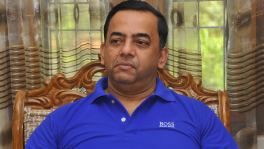
Rashed Al Mahmud Titumir, adviser for finance and planning to the prime minister, said raising public awareness and building a social movement are essential to expanding distributed renewable energy.
Describing energy as a fundamental right, he said collective efforts are needed to ensure universal access, adding, "I see no shortage of funds in this regard."
He said the government is pursuing a diversified energy mix and had introduced significant tax reforms alongside broader changes in fiscal policy.
"We are prioritising local manufacturing for essential renewable energy components, including PV panels, batteries and inverters," Titumir said.
Referring to recent global shocks, including the Covid-19 pandemic and the Middle East crisis, he said uncertainty had become the "new normal", making self-reliance increasingly important.
"We aspire to break free from a culture of dependency, yet we live in an uncertain world. To liberate ourselves, we must move away from dependency and transition toward a culture of self-reliance," he said.
Titumir also said the government had inherited a "toxic system" in the power and energy sector from the previous administration and would need to overcome its legacy.