Govt to hire 5,000 doctors, 1 lakh health staff for improved grassroots care
Recruitment process for around 900 doctors has begun
Highlights:
- Government plans to recruit 5,000 doctors in phases
- Another 100,000 health workers will also be recruited
- Upazila hospitals will receive expanded infrastructure, equipment and digital systems
- Health budget reaches record Tk69,409 crore for FY2026-27
- Allocation exceeds 1% of GDP for the first time
- New workers will conduct household checks for early disease detection
The government plans to recruit 5,000 doctors and 1 lakh health workers in phases to strengthen public healthcare services at the grassroots, alongside expanding health infrastructure at upazila level under the record Tk69,409 crore health allocation for FY2026-27.
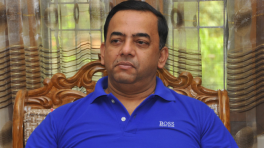
State Minister for Health and Family Welfare MA Muhit said five to eight new doctors have been posted to each upazila since the government took office. The ministry has also asked the Public Service Commission to recruit another 5,000 doctors, while the recruitment process for around 900 doctors has begun.
 Keep updated, follow The Business Standard's Google news channel
"We currently have around 40,000 field-level health workers, but for a population of 20 crore, we need around 1.5 lakh," he told The Business Standard.
Muhit said the government therefore plans to recruit another 1 lakh health workers in phases.
This year's allocation for healthcare is equivalent to 1.01% of GDP, marking the first time Bangladesh's health budget has crossed 1% of GDP, he said.
"We are not looking at the new budget simply in terms of the amount of money. It is the first step in a five-year health reform plan," Muhit said, listing preventive healthcare as another priority.
He said the largest share of the budget will go towards expanding upazila-level hospitals with necessary medical equipment, primary healthcare and digital health systems , while a significant allocation has also been set aside for recruiting staff to run the expanded facilities.
The health ministry is preparing a workforce plan based on existing vacancies, future demand and staffing needs at the new hospitals, he said.
"New recruits will be trained under a modern curriculum and provided with special health kits to conduct household-level checks, including blood pressure, blood glucose and other basic tests. This will help with early detection of non-communicable diseases such as diabetes, hypertension and cancer," he said.
Muhit said around 503 upazila health complexes will be upgraded from 30- or 50-bed facilities to full-fledged 150- or 151-bed hospitals, with new buildings, additional wards and other necessary infrastructure.
Assessments have already been completed in each upazila, covering available land, existing buildings and expansion needs, he said. Four hospital designs have been prepared based on the findings.
"Getting the allocation is important, but the real challenge is building the administrative capacity to spend it properly. That is what we are working on. Several initiatives have already begun," Muhit added.
Pathology labs, ambulance services to be expanded
Medical equipment and diagnostic services are another major spending priority.
Muhit said the government plans to set up a basic pathology laboratory at every upazila health complex so that most common diagnostic tests can be done locally free of cost.
"A hospital is not just a building. Modern equipment, laboratories and trained technicians are essential to provide effective care. That is why we will make significant investments in medical equipment," he said.
A separate allocation has also been set aside to rebuild ambulance services at district and upazila levels, Muhit said.
The government plans to establish a national ambulance pool so patients can be transported quickly to hospitals from anywhere in the country, he added.
Investment in specialised hospitals
Muhit said part of the budget will go towards expanding specialised hospitals.
Plans include new buildings and additional beds at the National Institute of Ophthalmology and Hospital, as well as new academic and research units at the National Institute of Cardiovascular Diseases and expanded patient services in its existing buildings.
The government also plans to strengthen health administration through the newly established Bangladesh Institute of Health Management in Savar.
The institute will provide leadership and management training to civil surgeons, divisional directors and upazila health and family planning officers.
"Most health administrators are doctors, but many lack formal training in management," Muhit said. "The institute is intended to address that gap."

E-health pilot in five districts
Digital health is another priority under the budget, Muhit said.
Under the planned e-health system, each citizen will receive a unique health ID linked to their previous treatment, test results and prescriptions, allowing the information to be accessed at hospitals across the country.
The pilot will initially be launched in Khulna, Bogura, Sirajganj, Narsingdi and Noakhali, he said.
"We expect the prototype to be ready by December," Muhit said.
He said the pilot will run for around one to one-and-a-half years before the system is expanded nationwide.
The government also plans to introduce digital monitoring of doctors' attendance and online booking for outpatient tickets to improve transparency and reduce long queues, he added.
Expert urges focus on existing gaps, national health fund
Professor Syed Abdul Hamid of the Institute of Health Economics at the University of Dhaka told TBS that the most effective use of this year's health budget may be to quickly address existing gaps in healthcare rather than announce new projects.
"Projects such as expanding hospitals from 50 to 150 beds or introducing new ambulance services will take time. The priority should be to use this budget in ways that bring immediate benefits to people," he said.
Hamid said public hospitals still face broken diagnostic equipment, shortages of reagents and staff, weaknesses in medicine distribution, and a lack of flexible funds that hospital managers can use to address urgent needs.
"These may appear to be small problems, but they are important. If the budget is used to address them, fewer patients will need to go to private facilities and the quality of services can improve quickly," he said.
Hamid also suggested using a substantial part of the Tk23,500 crore he said was earmarked for development projects to create a National Health Fund.
"If there is a dengue emergency, a saline shortage or a CT scan machine breaks down at a hospital, money could be released immediately instead of waiting for the next budget," he said.
Such a fund would make healthcare services more responsive to urgent needs, Hamid added.