State files appeal against HC verdict on SC Secretariat
Under the current Article 116 of the Constitution, the president exercises control and disciplinary authority over persons employed in the judicial service and magistrates performing judicial functions, in consultation with the Supreme Court.

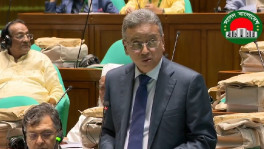
The state has filed an appeal against a High Court (HC) verdict regarding the establishment of a separate secretariat for the Supreme Court (SC).
Confirming the matter to newsmen, Attorney General Md Ruhul Quddus Kazal said the matter is scheduled to be heard by the Appellate Division chamber judge court later in the day.
"I hope the hearing will be held in this connection today," he said.
 Keep updated, follow The Business Standard's Google news channel
The High Court judgment on the separate secretariat of the Supreme Court came on 2 September 2025, following the final hearing of a writ petition. The 185-page full text of the judgment was published on the Supreme Court website on 7 April 2026.
In the verdict, the High Court scrapped provisions of Article 116 of the Constitution that vested the president with authority over posting, promotion, leave and disciplinary control of magistrates serving in subordinate courts.
As a result, those powers were transferred to the Supreme Court. The court also cancelled the Judicial Service (Discipline) Rules, 2017 for subordinate courts.
The writ petitioners were represented by lawyer Mohammad Shishir Manir, while senior advocate Sharif Bhuiyan served as amicus curiae. The state was represented by then attorney general Md Asaduzzaman.
On 25 August 2024, seven Supreme Court lawyers filed the writ petition challenging the legality of Article 116 and the Judicial Service (Discipline) Rules, 2017, while also seeking directives for establishing a separate judicial secretariat. The High Court issued a rule on 27 October that year.
Under the current Article 116 of the Constitution, the president exercises control and disciplinary authority over persons employed in the judicial service and magistrates performing judicial functions, in consultation with the Supreme Court.
The petitioners argued that the executive branch effectively exercises those powers on behalf of the president, undermining judicial independence.
They also noted that the original 1972 Constitution vested those responsibilities in the Supreme Court, before they were transferred to the president through the Fourth Amendment in 1974. The fifth amendment later added the provision of requiring consultation with the Supreme Court.
Later, when the Appellate Division of the Supreme Court declared the Fifth Amendment unconstitutional, the same provision was reinstated in Article 116 through the Fifteenth Amendment Act, 2011. The provision currently remains in force under Article 116 of the Constitution.